

The challenge for many buyers today isn't access to information.
It's interpreting that information in a way that makes sense for their finances, goals, and stage of life.
Over time, that's also why we decided to work with agents who shared the same data-driven and advisory-led approach behind our editorial, consultants who could help readers think through decisions more objectively, rather than simply push transactions.
Today, the team has worked with more than 2,000 clients across over $5B in property transactions.
How bad can the compact unit trend get? It’s all a matter of perspective. Singaporeans like to think we have it pretty bad - in recent years, three-bedders have been around 800 to 900 sq ft. (or even 700 sq ft), two-bedders at under 600 sq ft., and one-bedders at around 400 sq ft. And as for the dual-key versions, let’s just say I can see why they aren’t popular. These units are already small - with the dual-key subunit.

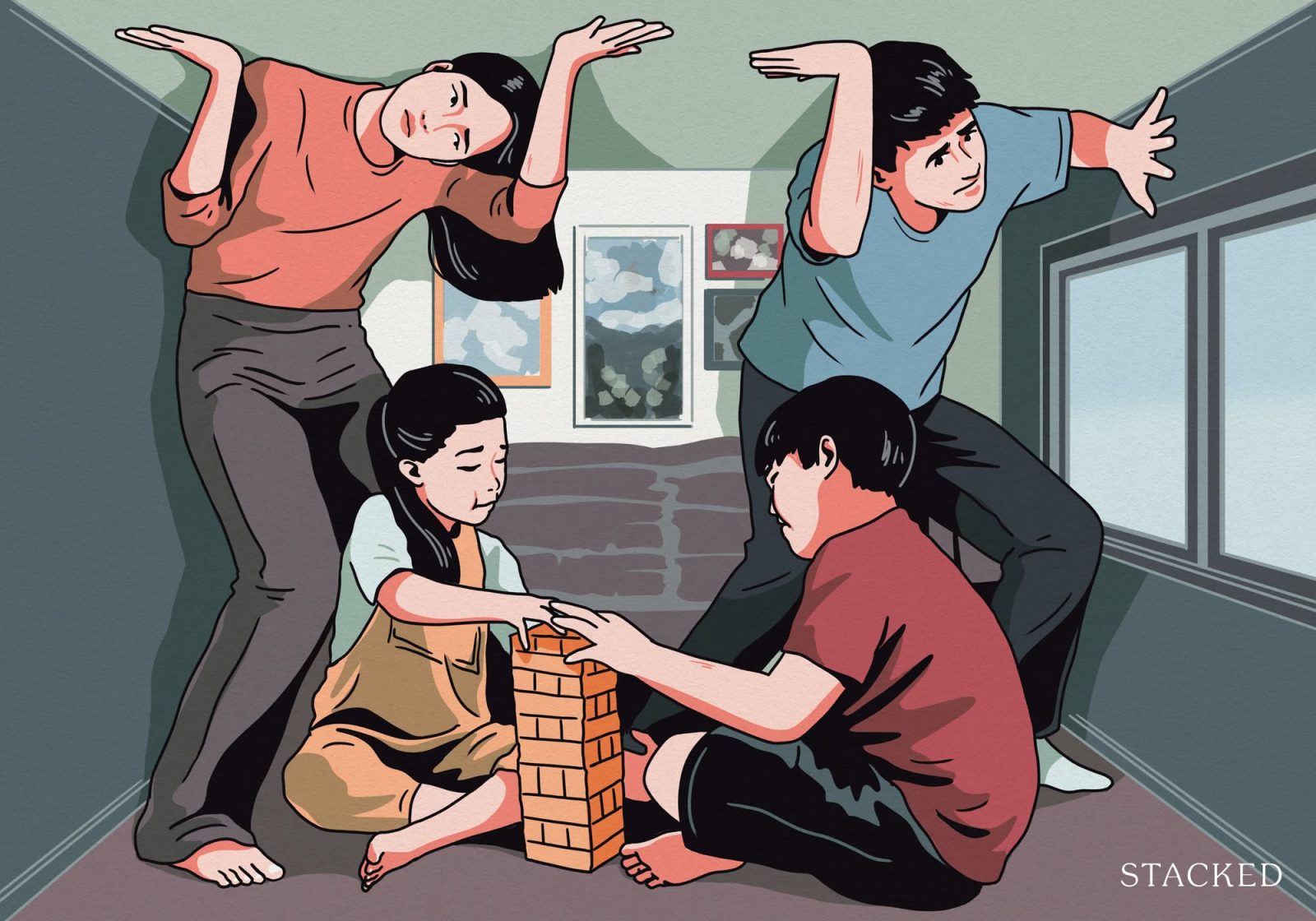
I suspect I can enjoy the unique experience of stretching my arms in the morning, and I’ll simultaneously be in my kitchen, bedroom, and adjoining study. But as bad as this may seem, we’re still nowhere close to the squeezed nature of Hong Kong, or possibly New York City. Here’s an example:
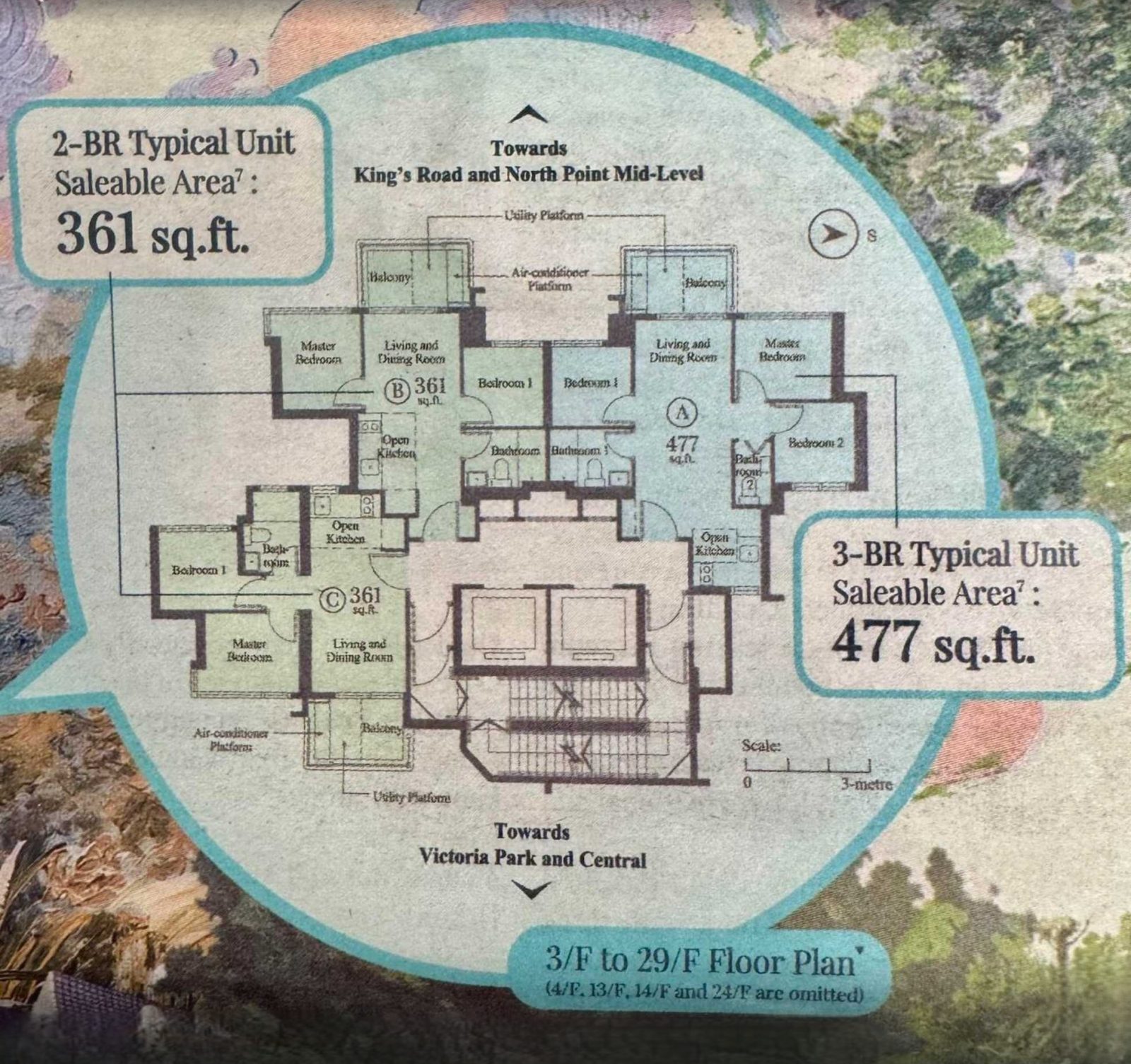
The three-bedder in that unit is 477 sq ft. That’s smaller than some one-bedders in Singapore. The two-bedder is 361 sq ft. For reference, a typical parking lot is 180 sq ft. Imagine two bedrooms, a bathroom, and a kitchen squeezed into a space that can hold maybe two Honda Civics. Space wise, I think that’s one microwave and a bunk bed away from calling it “micro-living”.
It isn’t just Hong Kong either, the proliferation of ever more compact units affects almost every major city struggling with housing prices (read: most of them since COVID.) In New York City, micro-units that measure around 300 sq ft. rent for US $1,900 to US$2,200 per month, making it affordable to middle-income singles and, I imagine, particularly stunted hamsters. I don’t know about the cost, but I do know this: if 300 sq ft. can be rented for that price, there’s going to be a rush of developers and landlords building and buying more of these as rental assets.
Developers have to work hard to convince us of the viability of smaller units; and if history proves anything, it’s that we will buy it

They won’t use the word small, ever. We’ll hear words like “thoughtful design”, “layout efficiency”, and “streamlined.” And because the show flat has good lighting, a ton of mirrors, and big open spaces knocked into the walls with see-through rooms, a surprising number will eat it up and say, “Wow, what a smart layout.”
This is how more people have already come to accept 600+ sq ft two-bedders as viable family homes. And if people in cities like Hong Kong are any sign, we can still adapt even further, to the point where layout efficiency = may not step on your roommate’s face when going to the toilet at night.
But URA has cracked down on this three times now
There’s a reason we never got to the same state as Hong Kong or parts of NYC. Here’s the quick reminder:
- In 2012, URA imposed an average unit size rule (70 sqm/753 sq ft).
- In 2018, URA tightened it further, even flagging projects like Margaret Ville and The Tapestry, where over half of the units were shoeboxes.
- In 2023, they slapped CCR condos with a new rule: at least 20 per cent of units must be family-sized (about 753 sqm).
Each time, the URA has made clear that they monitor residential property trends closely, and “will adjust the guidelines if needed.”

But consider that the current trend is to build smaller and more affordable; a tactic now accepted by the market, as we saw with launches like River Green. If developers really take this as a sign that they can go even smaller, then it’s just a matter of time before we see that happening as land prices go up.
So far, URA hasn’t outright stopped the building of compact units, merely prescribed minimum size averages, or percentage allocations of smaller units. But given how eager they are to turn CCR zones into viable family living areas, it wouldn’t surprise me if there were measures taken in prime areas; possibly even developer incentives tied to family-oriented homes (e.g., more leeway on the five-year ABSD time limit, for projects that build only three-bedders or larger).
This isn’t entirely without drawbacks, though. If the brakes slam down on compact units, it might close off doors to home ownership for some singles, and it may be an even more uphill struggle for sandwiched Singaporeans, who bust the HDB income ceiling but also can’t afford a true family-sized condo unit.
Meanwhile in other property news:
- What happens when a PR might be forced to look for private housing, after her Singaporean citizen spouse passes on? We discussed the situation and some possible solutions.
- If you’re a young (especially single) Singaporean and feel it’s exceedingly hard to be a homeowner today, we have bad news and worse news: you’re not wrong, and it’s not likely to get better.
- Costa Cabana can frankly sell just on the basis of being an EC in the East, but here’s a review of this upcoming new project.
Follow us on Stacked for news and updates on the Singapore property market.
Weekly Sales Roundup (1 to 7 December)
Top 5 Most Expensive New Sales (By Project)
| PROJECT NAME | PRICE S$ | AREA (SQFT) | $PSF | TENURE |
|---|---|---|---|---|
| THE RESERVE RESIDENCES | $6,717,720 | 2530 | $2,656 | 99 yrs (2021) |
| UNION SQUARE RESIDENCES | $5,234,000 | 1518 | $3,449 | 99 yrs (2024) |
| PINETREE HILL | $4,687,000 | 1733 | $2,705 | 99 yrs (2022) |
| GRAND DUNMAN | $4,422,000 | 1927 | $2,295 | 99 yrs (2022) |
| THE CONTINUUM | $3,950,000 | 1496 | $2,640 | FH |
Top 5 Cheapest New Sales (By Project)
| PROJECT NAME | PRICE S$ | AREA (SQFT) | $PSF | TENURE |
|---|---|---|---|---|
| THE CONTINUUM | $1,338,000 | 560 | $2,390 | FH |
| TEMBUSU GRAND | $1,426,000 | 527 | $2,704 | 99 yrs (2022) |
| OTTO PLACE | $1,486,000 | 872 | $1,704 | 99 yrs (2024) |
| ZYON GRAND | $1,513,000 | 538 | $2,811 | 99 yrs (2024) |
| AURELLE OF TAMPINES | $1,515,000 | 840 | $1,804 | 99 yrs (2024) |
Top 5 Most Expensive Resale
| PROJECT NAME | PRICE S$ | AREA (SQFT) | $PSF | TENURE |
|---|---|---|---|---|
| TURQUOISE | $12,000,000 | 7987 | $1,502 | 99 yrs (2007) |
| BALMORAL RESIDENCES | $6,399,000 | 2314 | $2,765 | FH |
| LEONIE TOWERS | $6,250,000 | 3251 | $1,923 | FH |
| THE RESIDENCES AT W SINGAPORE SENTOSA COVE | $6,081,200 | 3272 | $1,858 | 99 yrs (2006) |
| THE BALMORAL | $5,300,000 | 2680 | $1,977 | FH |
Top 5 Cheapest Resale
| PROJECT NAME | PRICE S$ | AREA (SQFT) | $PSF | TENURE |
|---|---|---|---|---|
| SUITES AT BUKIT TIMAH | $688,000 | 366 | $1,880 | FH |
| MY MANHATTAN | $720,000 | 441 | $1,631 | 99 yrs (2010) |
| #1 SUITES | $730,000 | 560 | $1,304 | FH |
| CARDIFF RESIDENCE | $735,888 | 420 | $1,753 | 99 yrs (2011) |
| PARC ELEGANCE | $753,000 | 441 | $1,706 | FH |
Top 5 Biggest Winners
| PROJECT NAME | PRICE S$ | AREA (SQFT) | $PSF | GAINS ($) | HOLDING PERIOD |
|---|---|---|---|---|---|
| LEONIE TOWERS | $6,250,000 | 3251 | $1,923 | $3,600,000 | 20 Years |
| PARK INFINIA AT WEE NAM | $3,620,000 | 1442 | $2,510 | $2,389,000 | 19 Years |
| BALMORAL RESIDENCES | $6,399,000 | 2314 | $2,765 | $2,299,000 | 15 Years |
| SOMMERVILLE PARK | $4,390,000 | 1959 | $2,241 | $2,010,000 | 19 Years |
| ST MARTIN RESIDENCE | $3,880,000 | 1528 | $2,538 | $1,880,000 | 25 Years |
Top 5 Biggest Losers
| PROJECT NAME | PRICE S$ | AREA (SQFT) | $PSF | LOSS ($) | HOLDING PERIOD |
|---|---|---|---|---|---|
| MARINA ONE RESIDENCES | $1,342,000 | 743 | $1,807 | -$317,398 | 6 Years |
| GILSTEAD TWO | $1,600,000 | 904 | $1,770 | -$78,483 | 15 Years |
| SOPHIA HILLS | $1,058,000 | 570 | $1,855 | -$76,000 | 9 Years |
| SPOTTISWOODE SUITES | $1,080,000 | 452 | $2,389 | -$57,000 | 13 Years |
| NORMANTON PARK | $930,000 | 527 | $1,763 | -$36,000 | 4 Years |
Top 5 Biggest Winners (ROI%)
| PROJECT NAME | PRICE S$ | AREA (SQFT) | $PSF | ROI (%) | HOLDING PERIOD |
|---|---|---|---|---|---|
| NEPTUNE COURT | $1,400,000 | 1270 | $1,102 | 268% | 23 Years |
| BISHAN 8 | $2,300,000 | 1163 | $1,978 | 241% | 20 Years |
| FAR HORIZON GARDENS | $2,200,000 | 1948 | $1,129 | 238% | 25 Years |
| THE CENTRIS | $1,530,000 | 936 | $1,634 | 222% | 19 Years |
| THE JADE | $1,950,000 | 1335 | $1,461 | 210% | 21 Years |
Top 5 Biggest Losers (ROI%)
| PROJECT NAME | PRICE S$ | AREA (SQFT) | $PSF | RETURNS | HOLDING PERIOD |
|---|---|---|---|---|---|
| MARINA ONE RESIDENCES | $1,342,000 | 743 | $1,807 | -19.1% | 6 Years |
| SOPHIA HILLS | $1,058,000 | 570 | $1,855 | -6.7% | 9 Years |
| SPOTTISWOODE SUITES | $1,080,000 | 452 | $2,389 | -5.0% | 13 Years |
| GILSTEAD TWO | $1,600,000 | 904 | $1,770 | -4.7% | 15 Years |
| THE GLADES | $835,000 | 484 | $1,724 | -3.8% | 8 Years |
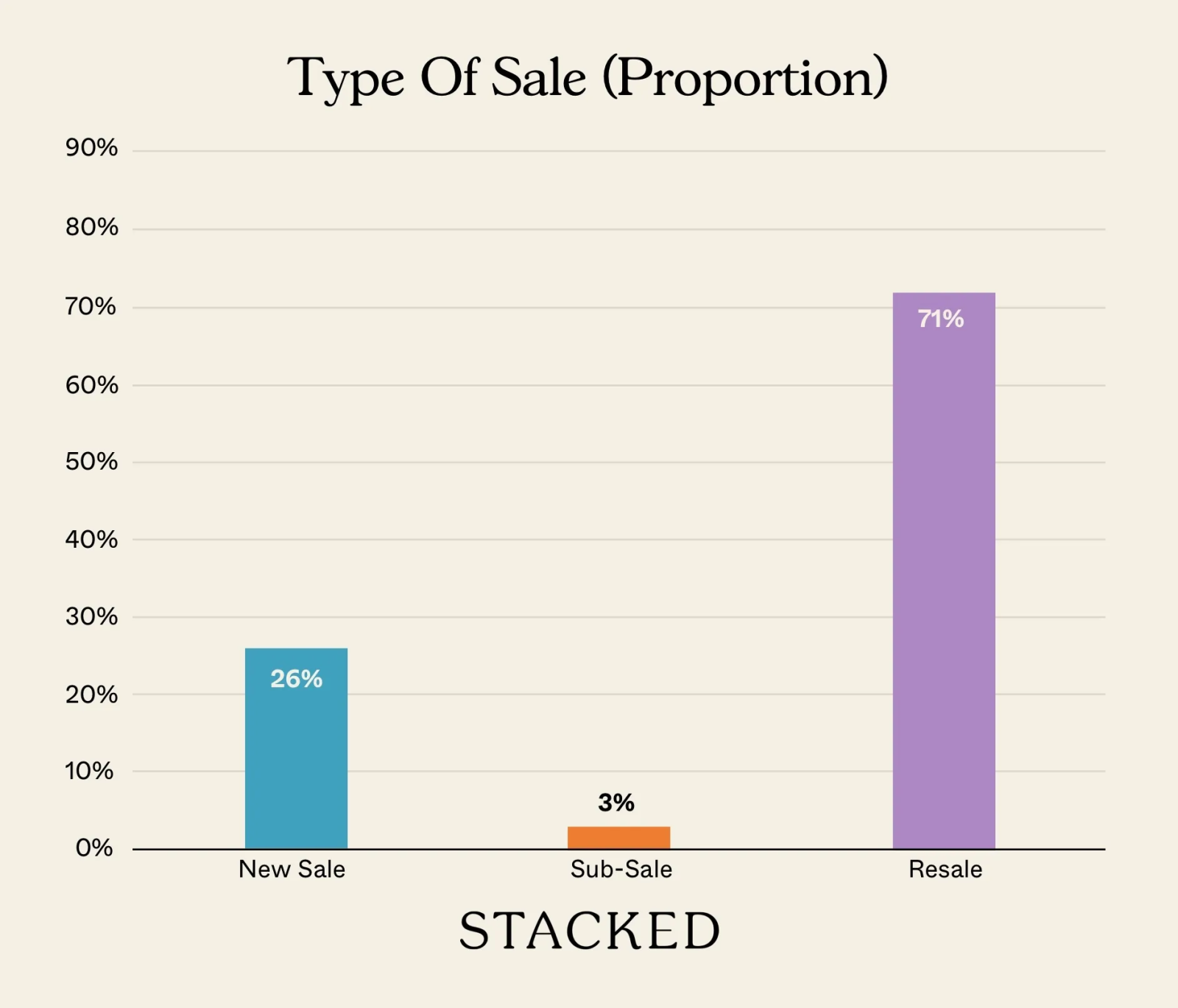
Transaction Breakdown
At Stacked, we like to look beyond the headlines and surface-level numbers, and focus on how things play out in the real world.
If you'd like to discuss how this applies to your own circumstances, you can reach out for a one-to-one consultation here.
And if you simply have a question or want to share a thought, feel free to write to us at stories@stackedhomes.com. We read every message.


0 Comments