

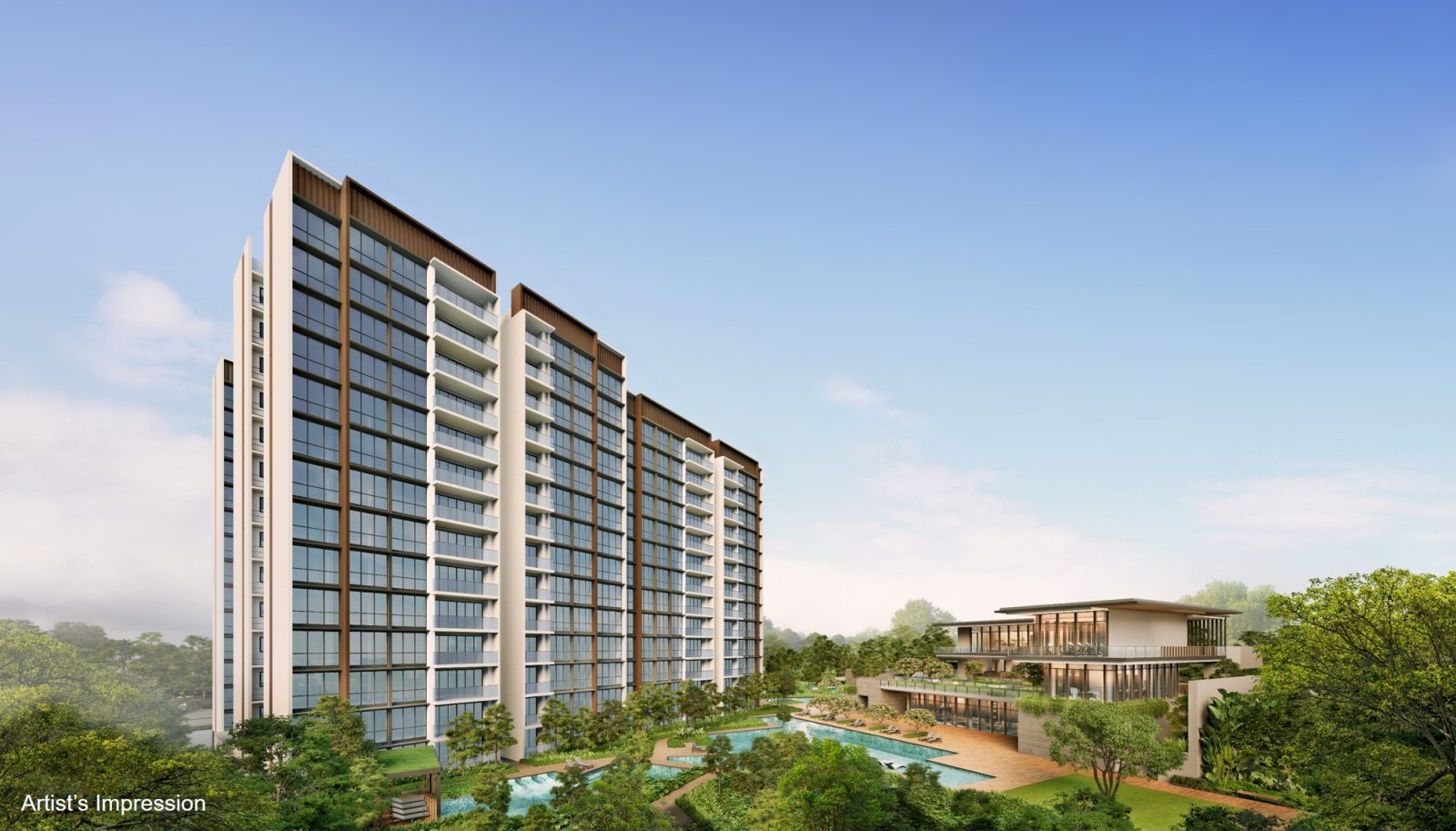
It looks like Executive Condominium (EC) prices are coming under the radar as more Singaporeans worry about these homes falling out of their affordability budgets.
In 2025, the median price of an EC was about $1,754 psf. The government says the median price of ECs is still about 20 to 30% cheaper than private condos, but EC prices have also risen from a median price of $794 psf back in 2015 to $1,537 psf in 2024.
That’s all a little too quick in the view of many aspiring Singaporean buyers, so the policy is now being reviewed. You could interpret that as the government’s way of saying: “We are aware this thing has drifted somewhat from its original purpose.”
This also ties in to what we’ve been saying for sometime: the price of an EC today is so high that, when coupled with the $16,000 income ceiling and the 30% Mortgage Servicing Ratio (MSR) restriction, even getting the full loan amount is near-impossible.
That said, I do have to acknowledge that concerns about the uptick in EC prices aren’t entirely unfounded. Land prices and construction costs are higher than in 2015, and comparing them to prices 10 years ago is too great a disconnect.
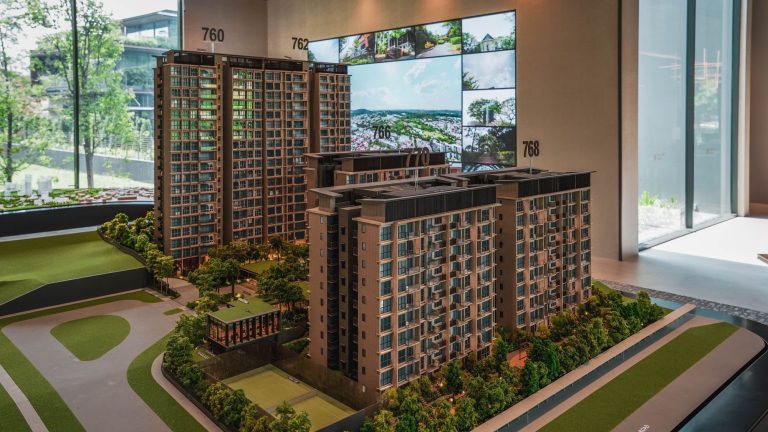
It’s also fair to say the quality of ECs of today is very different from the first generation of ECs. Looking at recent EC projects like Coastal Cabana and the recently unveiled Rivelle, I daresay that the quality gap with private condos has closed, along with the price. Among these newer projects, I find some visitors don’t even realise it’s an EC unless they’re told.
In terms of innovation in Singapore’s housing market, recent projects feel like light-years away from the earliest ECs, which tend to have features such as more closely huddled stacks, more bare-bones facilities, and sometimes a distance away from any MRT station (although this does still happen in some newer ones).
If I had to point to a specific time when this quality leap came into most of our consciousness, I think it was around the time the term “luxury EC” came up; roughly around the launch of Ola, or the strong buying interest for Piermont Grand despite initial shock at the prices for a Sumang Walk (Punggol) EC.
In short, I don’t think the increase in prices has been unjustified. I also agree that they’re pushing the affordability limit for many local buyers, and it will be interesting to see how the government and developers settle on a solution.
The challenge for many buyers today isn't access to information.
It's interpreting that information in a way that makes sense for their finances, goals, and stage of life.
Over time, that's also why we decided to work with agents who shared the same data-driven and advisory-led approach behind our editorial, consultants who could help readers think through decisions more objectively, rather than simply push transactions.
Today, the team has worked with more than 2,000 clients across over $5B in property transactions.
Last week, I mentioned we’ve started a Q&A in the newsletter to answer some of the questions readers we’ve been getting from readers. The response was encouraging, so I thought we’d continue it this week with another batch. Here are a few questions that came in recently, covering everything from BTO eligibility to upgrading to a condo.
As always, these are the questions that get shorter answers because we don’t have specifics yet. If you need more, do write in to Stacked and we can help you on a more personal level.
Or you can do what a certain reader does, and ambush me in the elevator with two pages of questions every other weekend. You know who you are, TK.
Question 1: I’m currently living with my parents. Can I be listed as an essential occupier in their HFE if they apply for a BTO?
You can be listed as an essential occupier for your parents’ HDB Flat Eligibility (HFE) letter, assuming you meet the other usual conditions (e.g., you can’t be a private property owner, can’t be an owner or essential occupier of another flat, and so forth)
However, do remember that essential occupiers are also locked into the Minimum Occupancy Period (MOP) of the flat, be it five-years for standard or 10-years for Plus and Prime.
This can be a bit problematic if, during the MOP, you decide you want to buy your own home. While it’s possible to remove your name after the MOP, it can be a bit of a hassle. So if possible, try to avoid being listed as an Essential Occupier if you expect to buy your own home anytime soon.
Question 2: I’m not sure whether to apply for a Prime Location BTO or keep our current 5-room flat.
The answer is entirely dependent on your future plans. If you opt for Prime, it does mean a smaller unit (so far, Prime projects have only gone up to 4-room flats in size), as well as restrictions such as a 10-year MOP, Subsidy Recovery, inability to ever rent out the whole flat, etc.
An important issue with Prime flats, which is often overlooked, is that subsequent buyers of your flat are still subject to the prevailing income ceiling. This will restrict future potential for gains, even despite the stronger location. Conversely, your standard 5-room flat has no such restriction, making it easier to resell for the price you want.
That said, the Prime and Plus flats are a very new addition, and we have yet to see exactly how they perform at resale. But based on the existing framework, it’s clear that you should buy Prime or Plus flats only if your intention is to truly stay in that area, and not for expectations like upgrading.
As an alternative, I’d suggest you scout out resale flats close to Prime projects too. If you don’t mind an older flat and paying more, you may be able to secure a resale 5-room flat that’s fairly close to a Prime project.
Question 3: I’m planning to upgrade to a resale condo in Punggol with a $2 million budget. How should I choose my next home?
For an Outside of Central Region (OCR) area like Punggol, $2 million can almost certainly get you a three- or four-bedder, depending on the project in question.
As a matter of curiosity, is your existing flat at Northshore? I ask because there’s a huge number of flats that just reached MOP in that area last year, and I do speculate if that might create a lot more demand for condos in the Punggol area. Do write in to us with some of your specifics, and we can help you with a longer Q&A with proper comparisons.
For now, keep to the basics. Walk the grounds around the condo to check if the amenities suit you, ensure schools are within the one-kilometre range*, and engage an agent who recently transacted in the area (ideally, some time in the past year and no later)
*This matters even if you don’t have children going to the school, as it helps if you ever need to sell.
Question 4: As an HDB upgrader, should I choose a new launch, a leftover unit from a new launch, or a resale condo?
Buying earlier means you have a wider range of choices and alternatives as well. If you’re going for leftover units, everything depends on what’s left - they may be good ones that buyers had to back out of, or they may be the ones with the worst views, a mind-blowingly high quantum that’s outside of your budget, etc.
Incidentally, keep in mind that new launches are often cheapest in the earliest launch phases; these are the so-called early bird discounts. This is, however, not a guarantee (you can see more on developer pricing strategy here.)
With resale condos, the main draw is that you can move in right away, and the quantum (overall price) tends to be lower. Resale condos that are older, such as those from the ‘00s or earlier, also tend to be larger. But keep in mind that older resale condos, from before GFA harmonisation, include unlivable spaces like air-con ledges and strata void space in their total square footage. This can give the impression of a lower $PSF, and also distort the sense of how big they really are.
That said, buyers who like to check the reality on the ground - such as being able to see who the neighbours are, or see the condo as it is rather than as a floor plan or showflat - may still prefer resale.
This is quite a complex question, and I’m barely scratching the surface here, as it also involves considerations like your financial position, lifestyle needs, exit strategy, etc. Do write in with more specifics if you’d like a long-form Q&A response.
Meanwhile, in other property news…
- Check out our preview of the aforementioned Rivelle, which I think is almost indistinguishable from a fully private condo.
- The retail Podium at Tedge is back on the market, and these freehold retail units now feature a roughly $4 million price cut.
- A new 60-storey HDB flat? Sounds expensive…and like a windfall for someone. Here’s why it may not just be another Pinnacle @ Duxton.
- What went wrong at Kandis Residence? Find out with Stacked Pro readers how a low-density, landed enclave location still resulted in weak gains.
Weekly Sales Roundup (23 February - 01 March)
Top 5 Most Expensive New Sales (By Project)
| PROJECT NAME | PRICE S$ | AREA (SQFT) | $PSF | TENURE |
| PARK NOVA | $15,000,000 | 2906 | $5,161 | FH |
| PROMENADE PEAK | $6,335,400 | 1884 | $3,363 | 99 yrs (2024) |
| SKYE AT HOLLAND | $5,173,000 | 1765 | $2,930 | 99 yrs (2024) |
| WATTEN HOUSE | $5,090,000 | 1539 | $3,307 | FH |
| GRAND DUNMAN | $4,333,000 | 1679 | $2,580 | 99 yrs (2022) |
Top 5 Cheapest New Sales (By Project)
| PROJECT NAME | PRICE S$ | AREA (SQFT) | $PSF | TENURE |
| NEWPORT RESIDENCES | $1,375,000 | 452 | $3,041 | FH |
| THE CONTINUUM | $1,378,000 | 560 | $2,462 | FH |
| NARRA RESIDENCES | $1,381,000 | 646 | $2,138 | 99 yrs (2025) |
| OTTO PLACE | $1,593,000 | 904 | $1,762 | 99 yrs (2024) |
| SORA | $1,665,000 | 732 | $2,275 | 99 yrs (2023) |
Top 5 Most Expensive Resale
| PROJECT NAME | PRICE S$ | AREA (SQFT) | $PSF | TENURE |
| PARKVIEW ECLAT | $10,728,300 | 3251 | $3,300 | FH |
| ARDMORE THREE | $6,280,000 | 1744 | $3,601 | FH |
| LINCOLN SUITES | $5,850,000 | 3746 | $1,562 | FH |
| THE EQUATORIAL | $5,680,000 | 3455 | $1,644 | FH |
| THE WATERSIDE | $5,500,000 | 2411 | $2,281 | FH |
Top 5 Cheapest Resale
| PROJECT NAME | PRICE S$ | AREA (SQFT) | $PSF | TENURE |
| Q BAY RESIDENCES | $738,000 | 527 | $1,399 | 99 yrs (2012) |
| SPRING @ LANGSAT | $775,000 | 474 | $1,636 | FH |
| KINGSFORD . HILLVIEW PEAK | $788,888 | 527 | $1,496 | 99 yrs (2012) |
| SKY GREEN | $800,000 | 474 | $1,689 | FH |
| SEAHILL | $800,000 | 517 | $1,548 | 99 yrs (2011) |
Top 5 Biggest Winners
| PROJECT NAME | PRICE S$ | AREA (SQFT) | $PSF | RETURNS | HOLDING PERIOD |
| THE WATERSIDE | $5,500,000 | 2411 | $2,281 | $3,812,300 | 28 Years |
| CASA CAIRNHILL | $3,630,000 | 1636 | $2,219 | $2,370,000 | 20 Years |
| THE NEXUS | $3,310,000 | 1346 | $2,460 | $2,211,400 | 19 Years |
| ST MARTIN RESIDENCE | $4,050,000 | 1744 | $2,323 | $2,070,000 | 24 Years |
| EMERALD GARDEN | $2,860,000 | 1238 | $2,310 | $1,905,000 | 23 Years |
Top 5 Biggest Losers
| PROJECT NAME | PRICE S$ | AREA (SQFT) | $PSF | RETURNS | HOLDING PERIOD |
| THE CLIFT | $1,300,000 | 775 | $1,677 | -$815,769 | 15 Years |
| OUE TWIN PEAKS | $1,230,000 | 570 | $2,156 | -$466,727 | 10 Years |
| SOPHIA HILLS | $1,042,000 | 506 | $2,060 | -$128,000 | 11 Years |
| THE LAURELS | $2,580,000 | 883 | $2,923 | -$107,852 | 16 Years |
| THE ATELIER | $2,200,000 | 872 | $2,523 | -$105,112 | 3 Years |
Top 5 Biggest Winners (ROI%)
| PROJECT NAME | PRICE S$ | AREA (SQFT) | $PSF | ROI (%) | HOLDING PERIOD |
| SUNGLADE | $1,980,000 | 1152 | $1,719 | 230% | 25 Years |
| BULLION PARK | $1,900,000 | 1238 | $1,535 | 229% | 21 Years |
| THE WATERSIDE | $5,500,000 | 2411 | $2,281 | 226% | 28 Years |
| PARK GREEN | $1,780,000 | 1550 | $1,148 | 210% | 23 Years |
| THE NEXUS | $3,310,000 | 1346 | $2,460 | 201% | 19 Years |
Top 5 Biggest Losers (ROI%)
| PROJECT NAME | PRICE S$ | AREA (SQFT) | $PSF | ROI (%) | HOLDING PERIOD |
| THE CLIFT | $1,300,000 | 775 | $1,677 | -39% | 15 Years |
| OUE TWIN PEAKS | $1,230,000 | 570 | $2,156 | -28% | 10 Years |
| SOPHIA HILLS | $1,042,000 | 506 | $2,060 | -11% | 11 Years |
| THE JOVELL | $910,000 | 678 | $1,342 | -7% | 4 Years |
| THE ATELIER | $2,200,000 | 872 | $2,523 | -5% | 3 Years |
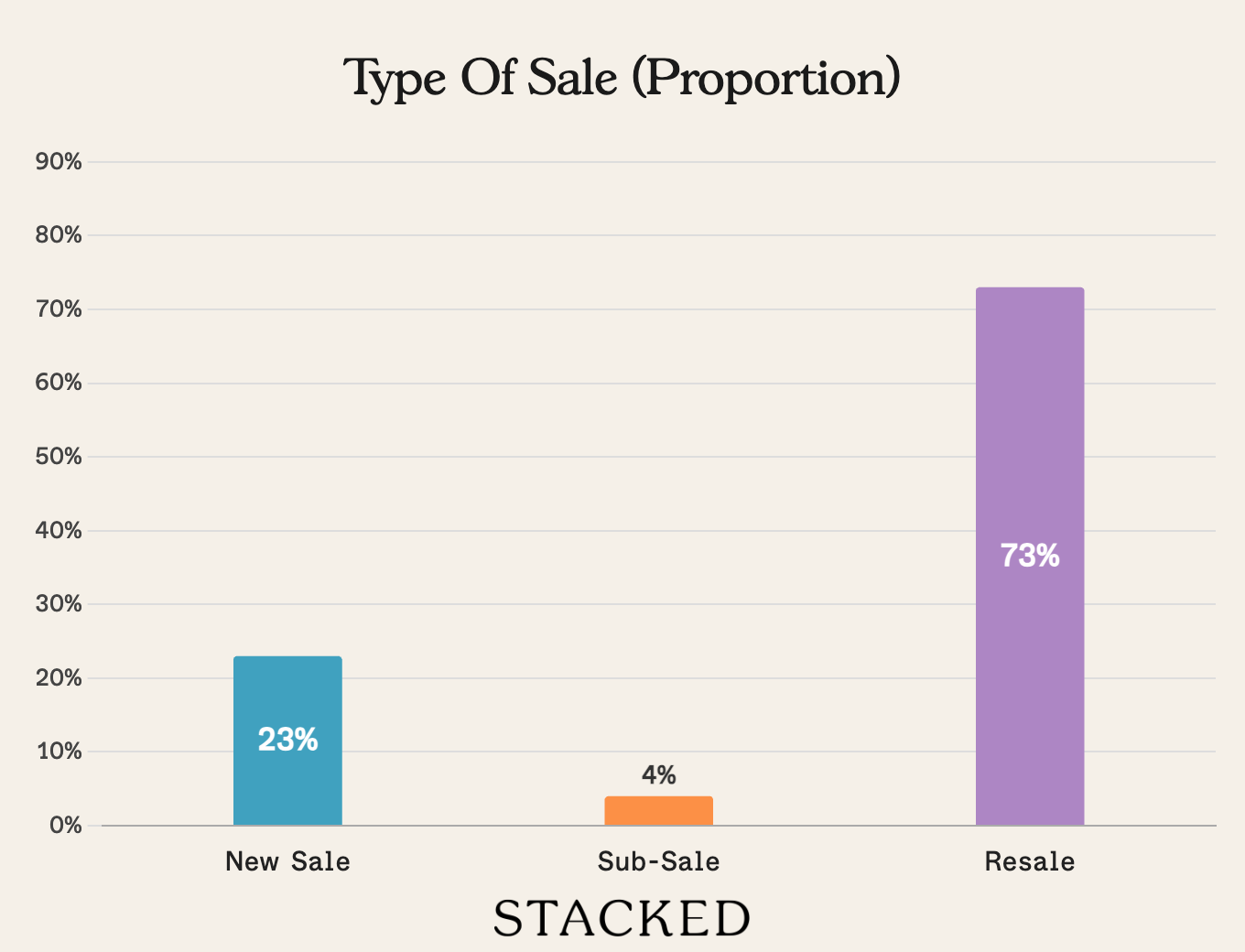
Transaction Breakdown
Follow us on Stacked for more news and insights on the Singapore property market.
At Stacked, we like to look beyond the headlines and surface-level numbers, and focus on how things play out in the real world.
If you'd like to discuss how this applies to your own circumstances, you can reach out for a one-to-one consultation here.
And if you simply have a question or want to share a thought, feel free to write to us at stories@stackedhomes.com. We read every message.


0 Comments