

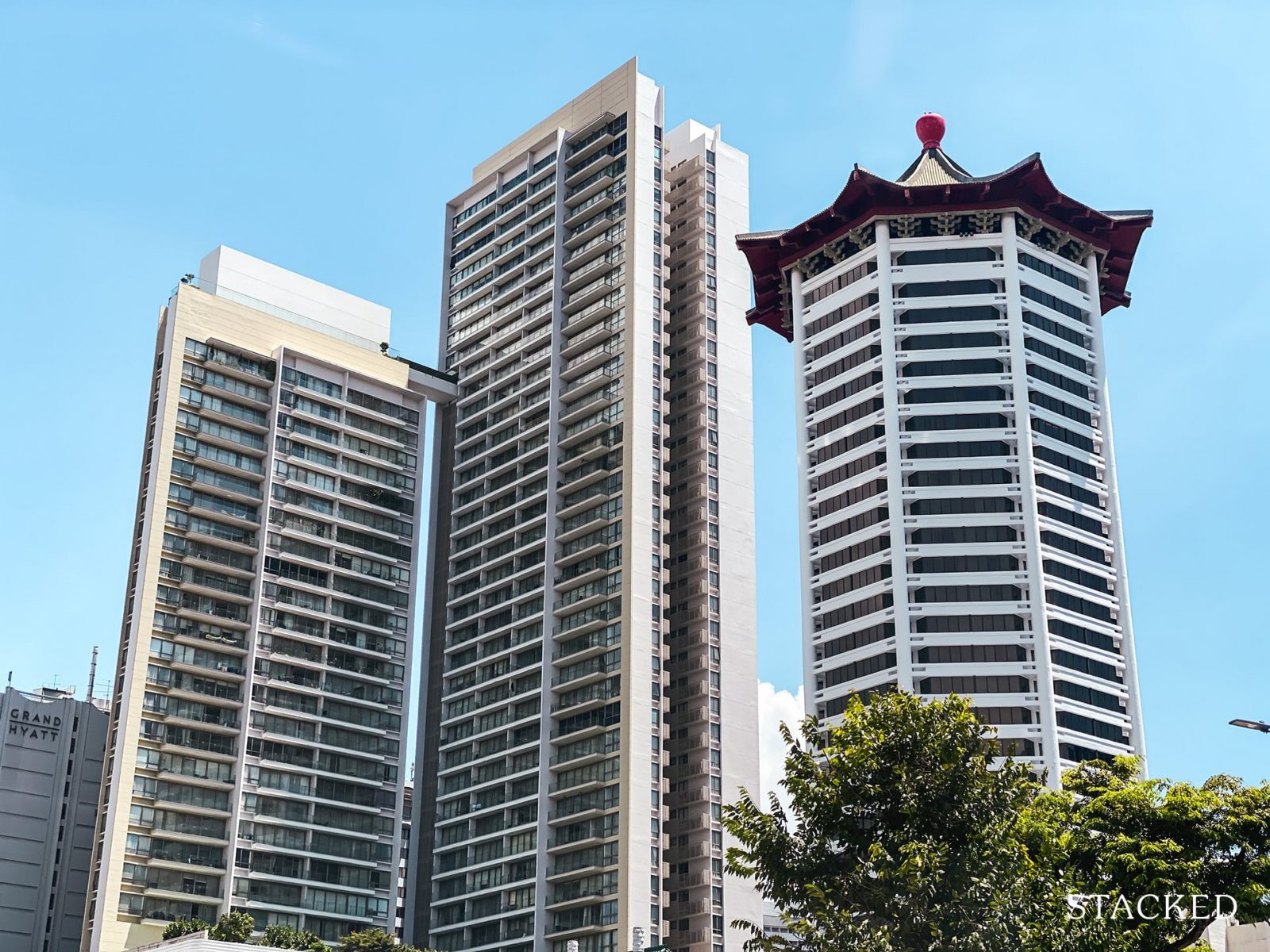
As a collective whole, most properties in Singapore tend to appreciate. This may be a result of many different factors, such as increasing land prices, the addition of better infrastructure, or broader economic growth (among many other reasons).
This was especially so during the pandemic period, as demand shot up and there wasn't enough supply to meet the demand.
However, not all properties followed this upward trend. While many condos saw significant price growth during the pandemic, some developments surprisingly stagnated. These cases raise important questions: Why did certain condos fail to appreciate despite the overall market boom? What factors caused their prices to plateau while others soared?
In this piece, we’ll explore some of the condos that have prices that have been stagnating as well as the common reasons behind this stagnation: from less favourable locations to the development type. By understanding these factors, buyers can better evaluate potential risks and spot condos that may underperform in the future, even in a rising market.
The challenge for many buyers today isn't access to information.
It's interpreting that information in a way that makes sense for their finances, goals, and stage of life.
Over time, that's also why we decided to work with agents who shared the same data-driven and advisory-led approach behind our editorial, consultants who could help readers think through decisions more objectively, rather than simply push transactions.
Today, the team has worked with more than 2,000 clients across over $5B in property transactions.
Condos with stagnating values
The following projects have an average price per square foot from 2022 to 2024 that is lower or equal to what they showed in 2019 to 2021. We used only projects with a minimum of five transactions.
Do note that certain outlier transactions (e.g. penthouses) may have resulted in a lower $PSF that skewed the data, but even on excluding them, the gain in $PSF was far below the average appreciation across all condos.
| Project | District | Segment | Area | Tenure | $PSF (2019 - 2021) | $PSF (2022 - 2024) |
| 26 NEWTON | 11 | CCR | Novena | Freehold | $2,284 | $2,214 |
| 8 FARRER SUITES | 8 | RCR | Kallang | Freehold | $1,625 | $1,610 |
| ALTEZ | 2 | CCR | Downtown Core | 99 yrs from 06/02/2008 | $2,131 | $1,968 |
| BELLE VUE RESIDENCES | 9 | CCR | River Valley | Freehold | $1,911 | $1,909 |
| BLISS@KOVAN | 19 | OCR | Hougang | Freehold | $1,415 | $1,411 |
| CENTRA RESIDENCE | 14 | RCR | Geylang | Freehold | $1,332 | $1,291 |
| CONCOURSE SKYLINE | 7 | RCR | Kallang | 99 yrs from 13/03/2008 | $1,973 | $1,954 |
| DEVONSHIRE RESIDENCES | 9 | CCR | River Valley | Freehold | $2,246 | $2,100 |
| GRANDVIEW SUITES | 14 | RCR | Geylang | Freehold | $1,322 | $1,178 |
| LOFT @ NATHAN | 10 | CCR | Tanglin | Freehold | $1,833 | $1,783 |
| LUMIERE | 2 | CCR | Downtown Core | 99 yrs from 21/03/2006 | $1,786 | $1,686 |
| MARINA BAY RESIDENCES | 1 | CCR | Downtown Core | 99 yrs from 11/10/2005 | $2,258 | $2,251 |
| MARINA COLLECTION | 4 | RCR | Southern Islands | 99 yrs from 03/01/2007 | $1,793 | $1,731 |
| MARTIN NO 38 | 9 | CCR | River Valley | Freehold | $2,467 | $2,457 |
| OUE TWIN PEAKS | 9 | CCR | River Valley | 99 yrs from 10/05/2010 | $2,423 | $2,298 |
| PALM GALLERIA | 15 | OCR | Bedok | Freehold | $1,211 | $1,194 |
| PARK RESIDENCES KOVAN | 19 | OCR | Hougang | Freehold | $1,774 | $1,819 |
| RANGOON 88 | 8 | RCR | Kallang | Freehold | $1,523 | $1,469 |
| ROBIN RESIDENCES | 10 | CCR | Tanglin | Freehold | $2,513 | $2,382 |
| ROBIN SUITES | 10 | CCR | Tanglin | Freehold | $2,378 | $2,271 |
| ROBINSON SUITES | 1 | CCR | Downtown Core | Freehold | $2,476 | $2,254 |
| SCOTTS SQUARE | 9 | CCR | Orchard | Freehold | $3,532 | $3,424 |
| SKYSUITES@ANSON | 2 | CCR | Downtown Core | 99 yrs from 18/02/2008 | $2,237 | $2,221 |
| SMART SUITES | 14 | RCR | Geylang | Freehold | $1,437 | $1,348 |
| STEVENS SUITES | 10 | CCR | Tanglin | Freehold | $1,772 | $1,695 |
| STUDIO 3 | 10 | CCR | Tanglin | Freehold | $1,767 | $1,765 |
| THE ASANA | 10 | CCR | Bukit Timah | Freehold | $2,441 | $2,437 |
| THE BEVERLY | 21 | RCR | Bukit Timah | Freehold | $1,132 | $1,102 |
| THE BOUTIQ | 9 | CCR | River Valley | Freehold | $2,021 | $1,871 |
| THE CREST | 3 | RCR | Bukit Merah | 99 yrs from 21/12/2012 | $1,981 | $1,931 |
| THE SCOTTS TOWER | 9 | CCR | Newton | 103 yrs from 01/10/2010 | $2,197 | $2,014 |
| URBAN LOFTS | 8 | RCR | Kallang | Freehold | $1,467 | $1,303 |
| V ON SHENTON | 1 | CCR | Downtown Core | 99 yrs from 29/11/2011 | $2,211 | $2,082 |
| WALLICH RESIDENCE | 2 | CCR | Downtown Core | 99 yrs from 21/02/2011 | $3,437 | $3,386 |
Common trends among the stagnating condos:
1. Most are located in the Core Central Region (CCR)
If you bring up the weak CCR performance, most real estate veterans will blame ABSD rate hikes. However, to be clear, the new ABSD rates - which raises stamp duties to 60 percent for foreigners - only happened in February 2024, whereas the above transactions have been ongoing since 2019.
Nonetheless, ABSD rates for foreigners have been high at 30 per cent, even since December 2021 (and 25 per cent before that). This does have a strong bearing on CCR properties, as foreigners make up a bigger buyer demographic here. If we combine the high ABSD rates over the past few years, along with the COVID-19 interval, it does explain the rather muted demand for CCR condos. This could be a reason why most of the stagnating condos were found in the prime region.
Another reason could be a simple lack of room for appreciation
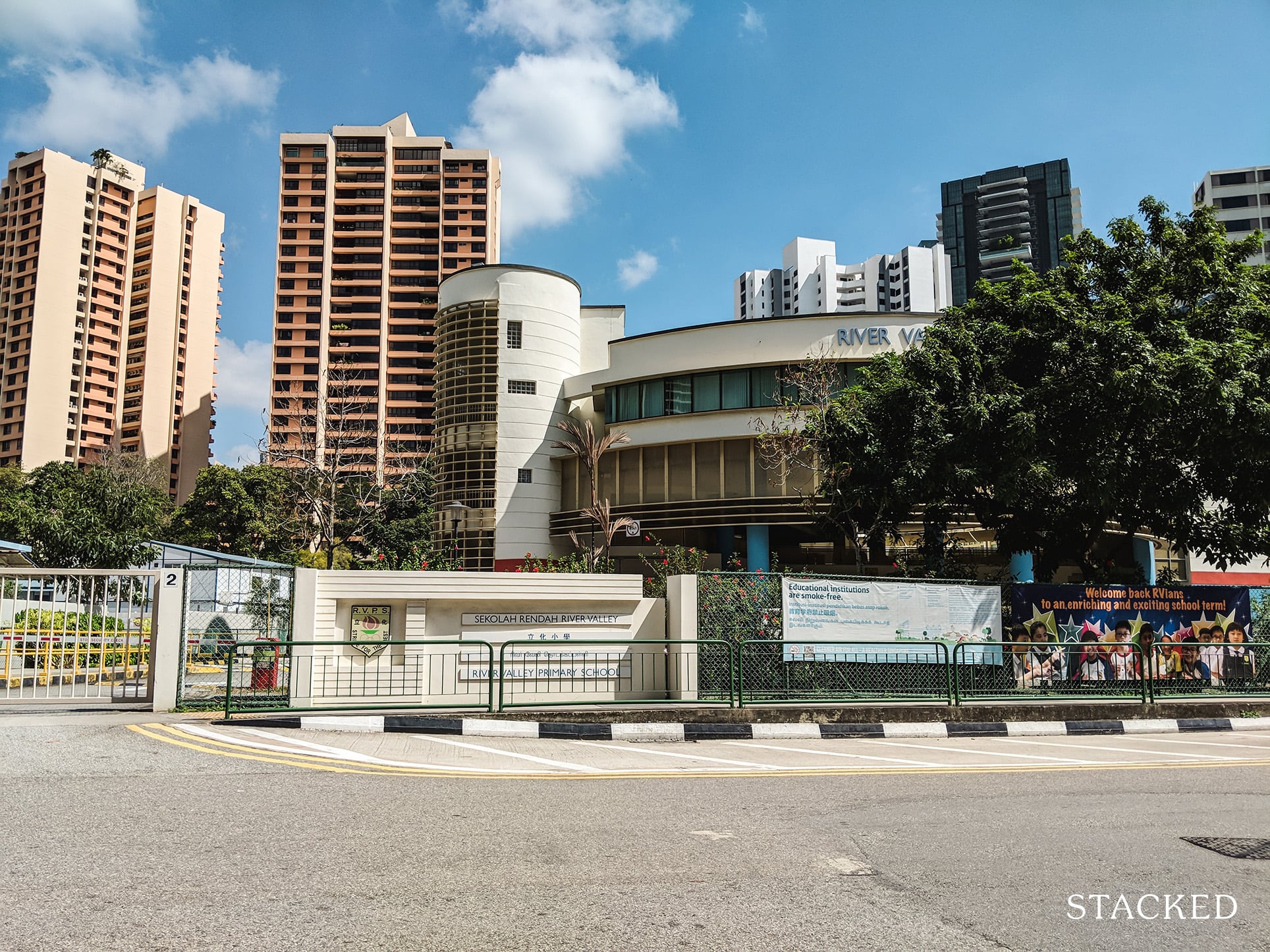
There’s no “first mover advantage” when buying in areas like Tanglin, River Valley, or the CBD. Unlike fringe regions such as Sengkang, Punggol, Pasir Ris, etc., these areas are already developed and pricey. There just isn’t much more improvement that could drive the price higher, such as the development of new hubs.
This makes it tougher for prime region condos, already bought at high prices, to challenge the much cheaper OCR condos. It’s not a coincidence that very few OCR condos make the list, as stagnation is unlikely when new MRT stations, malls, offices, etc. are actively being built in the area.
The prospective buyer pool for the listed condos is much smaller
The majority of the buyers consist of HDB upgraders and the above CCR projects don’t suit them. Besides the obvious issue of price (it’s unlikely that many can afford these projects, even after selling their flats), many of the projects aren’t in conventional family areas.
Condos like Altez, Devonshire Residences, and OUE Twin Peaks, for instance, have maybe just one school in enrolment distance; and there’s little in the way of green spaces that families like.
HDB upgraders also tend to upgrade to a condo closer to their original home, as they’re familiar with the surroundings. As there aren’t many flats that can be called “close” to Tanglin, River Valley, etc., there’s a limited number of upgraders.
Even among the affluent urban professionals, who aren’t family-oriented, there may be a preference for new launch CCR condos, which come with progressive payments and more up-to-date facilities. So when you consider how small the pool of prospective buyers is, it’s unsurprising that the prices don’t move much.
2. Smaller and boutique condos seem to suffer the most
Condos with fewer than 150 units made up the majority of stagnant projects (21 of the 34 listed projects).
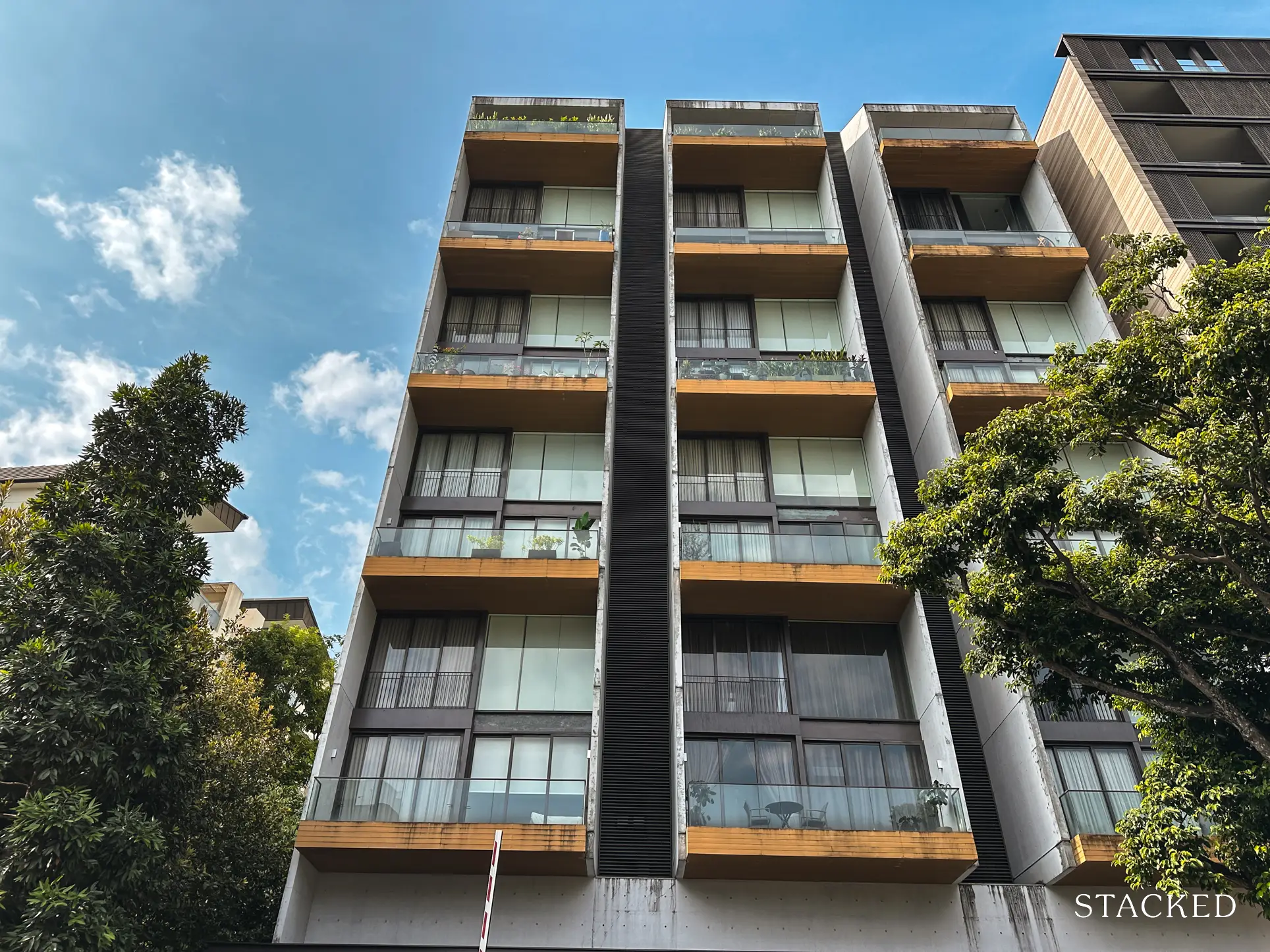
This is due to low transaction volumes, which match the low unit counts. When there’s only a handful of transactions every year, the prices can be very volatile: all it takes is one unusually low transaction to pull down the average. This in turn affects buyer perceptions: quite often, the buyer will base their offer on the last transaction, ignoring any special reasons behind it.
(We discuss this anchoring effect in this article as well)
Landlords may also be more conservative with their offers if faced with a low unit count. Fewer units also mean higher maintenance fees, as there are fewer of them to split the cost; this can drag down net rental yields, even if it does lower competition somewhat.
For buyers seeking resale gains, the above shows it may be better to consider mid-sized projects, where a healthy transaction volume could provide better price support.
3. Among the only three OCR entries, all are freehold
We’re excluding the leasehold/freehold consideration for the CCR, as a large majority of CCR projects are freehold anyway.
You might notice, however, that the very few stagnant OCR projects are freehold: Park Residences Kovan, Palm Galleria, and Bliss @ Kovan. This is likely due to the price premium on freehold properties, which are about 15 to 20 per cent pricier than equivalent leasehold counterparts.

Due to the higher initial cost, freehold projects need to appreciate more than leasehold, before you see the needle move on your investment returns. It can be much later in a condo’s lifespan - such as 20 or 30 years when lease decay starts to sink in - before the freehold status begins to pay off.
Bliss at Kovan and Park Residences Kovan are only around 10 years old, while Palm Galleria is only just nearing the 15-year mark. But perhaps in another decade or so, their freehold status will show its benefits, when they retain value better than nearby leasehold projects (assuming they don’t go en-bloc by then!)
This does show that, for buyers aiming at stronger resale gains, freehold may not be the best option for shorter holding periods.
If we consider the ABSD rate hikes, and continued decentralisation, the OCR may be the way to go in 2024
With the government building new hubs in Pasir Ris, Punggol, and Bayshore, projects in these areas have stronger raw potential for gains. Increasingly, Singaporeans find they no longer need to head to Orchard or the CBD for their needs, which could soften demand for expensive prime-area condos.
There’s also a concern that, whilst ABSD rates stay high (and we’ve never seen ABSD rates go down since they were first implemented), wealthy foreign buyers may no longer be your exit liquidity.
At Stacked, we like to look beyond the headlines and surface-level numbers, and focus on how things play out in the real world.
If you'd like to discuss how this applies to your own circumstances, you can reach out for a one-to-one consultation here.
And if you simply have a question or want to share a thought, feel free to write to us at stories@stackedhomes.com. We read every message.


0 Comments