

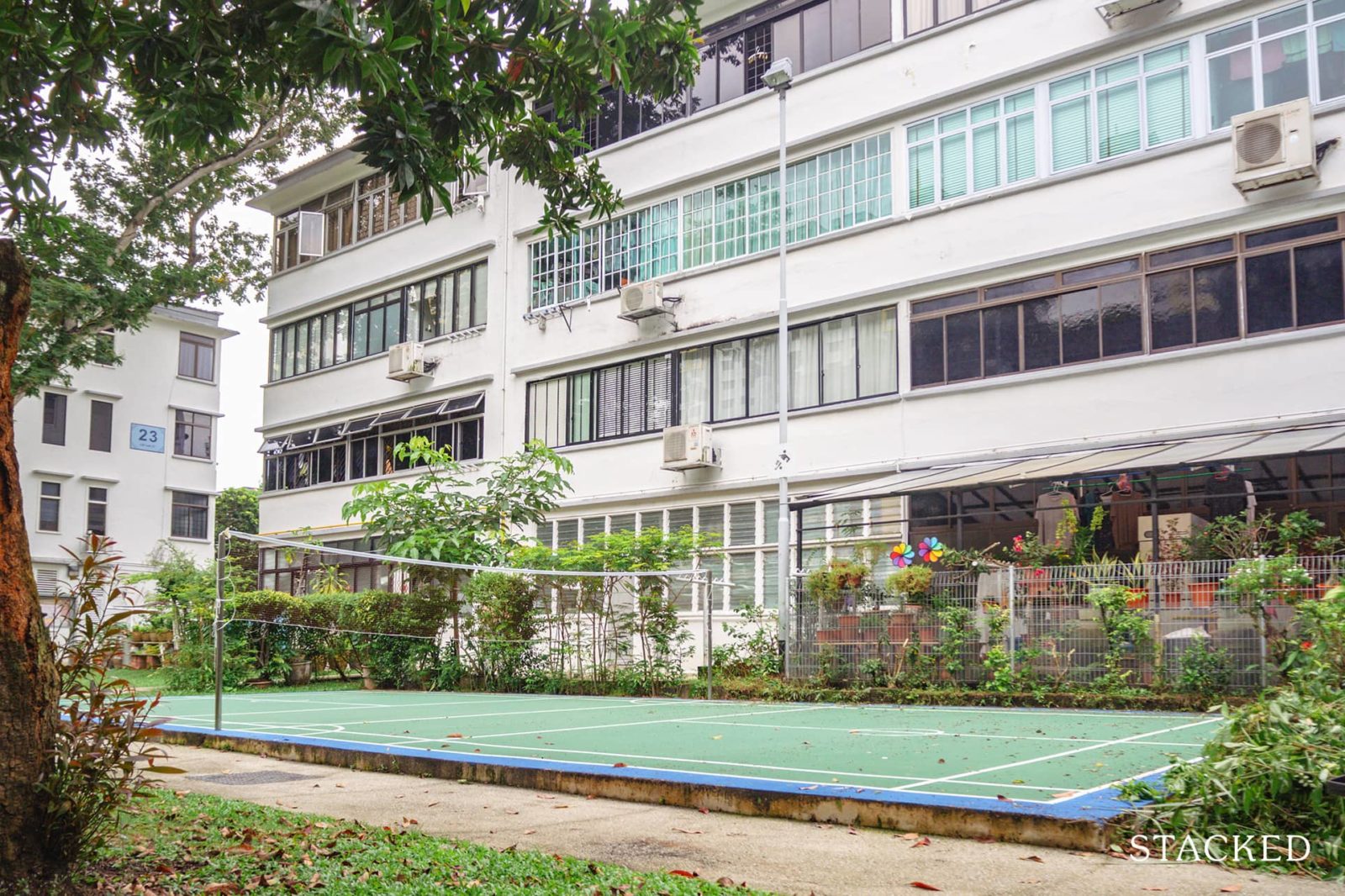
Tiong Bahru is unusual as far as HDB enclaves go. Some of the flats here are among the oldest in Singapore, and predate the HDB era; the housing board’s predecessor, SIT, is known for having built larger and less standardised units. Even the regular HDB flats in Tiong Bahru can be quite old, dating back to the earliest housing projects of the 1960s. And yet, Tiong Bahru is the iconic hipster neighbourhood: a high-rent area with a definite upper-income bent.
We know of many younger homeowners who desire to live in this unique neighbourhood, but are concerned by the age and high prices. Given this odd contrast of lease decay and high demand, can the old HDB flats of Tiong Bahru still be a suitable purchase? Here are the numbers to date:
The challenge for many buyers today isn't access to information.
It's interpreting that information in a way that makes sense for their finances, goals, and stage of life.
Over time, that's also why we decided to work with agents who shared the same data-driven and advisory-led approach behind our editorial, consultants who could help readers think through decisions more objectively, rather than simply push transactions.
Today, the team has worked with more than 2,000 clients across over $5B in property transactions.
Looking at 3-room flats in Tiong Bahru
As mentioned above, flats in Tiong Bahru are uncommon in terms of size; so bear in mind that when we say 3-room, it can refer to flats that go up to 947 sq.ft. By regular HDB standards, this is closer to a 4-room flat (which would be between 960 to just over 1,000 sq.ft.)
These are price trends over the past 10 years, first using price psf, and then overall quantum:
Do note that the strong returns between 2021 to 2024 is due to the post-Covid housing supply crunch, whilst the weak returns from 2013 to 2020 was due to several years of decline after the introduction of the Mortgage Servicing Ratio, and HDB ceasing publication of Cash Over Valuation data.
| Year | 3 Room $PSF | 3 Room Total Price |
| 2013 | $712 | $643,030 |
| 2014 | $687 | $622,643 |
| 2015 | $697 | $632,769 |
| 2016 | $709 | $633,500 |
| 2017 | $689 | $617,571 |
| 2018 | $646 | $592,222 |
| 2019 | $674 | $622,657 |
| 2020 | $639 | $582,357 |
| 2021 | $709 | $632,631 |
| 2022 | $732 | $654,909 |
| 2023 | $784 | $699,624 |
| 2024 | $812 | $737,324 |
| ROI (13 - 20) | -1.5% | -1.4% |
| ROI (21 - 24) | 4.6% | 5.2% |
| ROI (13 - 24) | 1.2% | 1.3% |
Returns of 1.2 and 1.3 per cent are far from impressive; you’d get twice as much from just CPF OA interest. However, it does drive home the point that in Tiong Bahru, even 50+ year old flats still see some appreciation.
Just for the sake of comparison, let’s look at the appreciation rates for flats in neighbouring Bukit Merah. For this estate, the flats have leases that date back to the ‘70s; not quite as dated as Tiong Bahru, but still quite old:
| Year | 3 ROOM | 4 ROOM | 5 ROOM |
| 2013 | $562 | $565 | $579 |
| 2014 | $536 | $532 | $557 |
| 2015 | $509 | $523 | $539 |
| 2016 | $484 | $535 | $539 |
| 2017 | $482 | $522 | $501 |
| 2018 | $452 | $462 | $508 |
| 2019 | $428 | $461 | $498 |
| 2020 | $433 | $456 | $483 |
| 2021 | $467 | $486 | $476 |
| 2022 | $515 | $523 | $578 |
| 2023 | $524 | $549 | $608 |
| 2024 | $541 | $561 | $630 |
| ROI (13 - 20) | -3.7% | -3.0% | -2.5% |
| ROI (21 - 24) | 5.0% | 4.9% | 9.8% |
| ROI (13 - 24) | -0.3% | -0.1% | 0.8% |
Over the same 10-year period, 3-room and 4-room flats here saw declining prices due to age. Only the 5-room flats saw a positive return, of less than a single percentage point. So it’s fair to say that demand in Tiong Bahru, whether due to its larger flats, hipster amenities, or proximity to Tanjong Pagar, makes the flats more resistant to lease decay.
Next, we made a comparison against all HDB towns in general:
| Year | 3 ROOM | 4 ROOM | 5 ROOM |
| 2013 | $523 | $528 | $534 |
| 2014 | $491 | $497 | $535 |
| 2015 | $468 | $476 | $516 |
| 2016 | $458 | $476 | $528 |
| 2017 | $438 | $469 | $513 |
| 2018 | $418 | $450 | $509 |
| 2019 | $402 | $418 | $478 |
| 2020 | $406 | $424 | $445 |
| 2021 | $450 | $463 | $514 |
| 2022 | $492 | $503 | $552 |
| 2023 | $512 | $520 | $566 |
| 2024 | $532 | $550 | $597 |
| ROI (13 - 20) | -3.6% | -3.1% | -2.5% |
| ROI (21 - 24) | 5.7% | 5.9% | 5.1% |
| ROI (13 - 24) | 0.2% | 0.4% | 1.0% |
There is positive appreciation across the board, but it’s not particularly significant - the best is a one per cent return. So again, Tiong Bahru does pull ahead of the pack.
What if we were to compare the returns of newer flats, to old Tiong Bahru properties?
For this comparison, we looked again at flats in Bukit Merah. This time we will look at flats with leases dating back from 1990 to 1999.
| Year | 3 ROOM | 4 ROOM | 5 ROOM |
| 2013 | No Data | $568 | $581 |
| 2014 | No Data | $559 | $579 |
| 2015 | No Data | $533 | $589 |
| 2016 | No Data | $554 | $552 |
| 2017 | No Data | $554 | $562 |
| 2018 | No Data | $565 | $594 |
| 2019 | No Data | $574 | $582 |
| 2020 | No Data | $551 | $565 |
| 2021 | No Data | $599 | $595 |
| 2022 | $483 | $629 | $653 |
| 2023 | $552 | $658 | $687 |
| 2024 | No Data | $713 | $734 |
| ROI (13 - 20) | No Data | -0.4% | -0.4% |
| ROI (21 - 24) | No Data | 6.0% | 7.3% |
| ROI (13 - 24) | No Data | 2.1% | 2.1% |
Newer flats have a higher rate of appreciation, particularly 4 and 5-room flats. To some degree this is unsurprising, given the financing issues faced by buyers of older flats. Banks may lower lending limits once there’s 60 years or less on the lease, for example, and CPF usage is more limited if the lease doesn’t last till the youngest buyer is 95.
The overall conclusion is that - whilst Tiong Bahru flats do defy ageing better than other HDB counterparts - it’s not to the extent we can ignore lease decay. So whilst the location and amenities may be excellent, young buyers should have clear exit plans; plans which don’t assume significant resale value from liquidating the flat.
There’s also the added risk that gentrification comes and goes. As quickly as the hipster cafes and boutiques moved in, they can also move out to another, trendier hotspot; and this might bring a steep drop in demand. There’s no crystal ball with which we can predict this.
What about using the flats as rental assets?
If you’re lucky enough to have a Tiong Bahru flat to rent out, then you would have had a windfall from the gentrification of the area:
| Year | Post-War SIT Flat Median Rent | Bukit Merah Median Rent (Q1 Of Each Year) |
| 2013 | $2,550 | $2,200 |
| 2014 | $2,700 | $2,210 |
| 2015 | $2,800 | $2,200 |
| 2016 | $2,600 | $2,100 |
| 2017 | $2,650 | $2,000 |
| 2018 | $2,700 | $1,900 |
| 2019 | $2,600 | $1,900 |
| 2020 | $2,700 | $1,900 |
| 2021 | $2,525 | $2,000 |
| 2022 | $3,100 | $2,100 |
| 2023 | $4,200 | $2,800 |
| 2024 | $4,100 | $2,800 |
| Change in Rent (2013 - 2024) | 60.8% | 27.3% |
| Change in Rent (2021 - 2024) | 62% | 40% |
Rents in Tiong Bahru are up by 60 per cent over the past three years, compared to 40 per cent in neighbouring Bukit Merah. This is a little unsurprising given the demand, and that - as long as the flat is well maintained - tenants may not pay significantly less just because it's older.
But if you really want to live in Tiong Bahru, does it make sense to buy there instead of renting?
Let’s say the flat is 51 years old, and has 48 years remaining:
| Price in 2024 | $737,324 |
| Lease remaining | 48 |
| Price per lease remaining | $15,361 |
| Monthly "rent" | $1,280 |
By buying instead of renting, you’re paying $1,280 per month to live in Tiong Bahru. This is about a third (31 per cent) lower than the rental rates common to Tiong Bahru right now; but it comes with the baggage of a down payment, renovations, property taxes, etc., which either evens out the “savings” or still makes things more expensive overall.
What if we compare it to a newer and more expensive flat, such as one that’s around 14 years old (85 years left on the lease)
| Price | $737,324 |
| Lease remaining | 85 |
| Price per lease remaining | $8,674 |
| Monthly "rent" | $723 |
Compared to this newer flat, you’d be paying around 77 per cent more to rent in Tiong Bahru, with the older unit. This comes to a rather substantial saving.
Overall, we can conclude that buying in Tiong Bahru is still somewhat reasonable if (1) you intend to live there for a long time, possibly to the very end, and (2) $1,280 a month, for around 49 years, falls within your range of affordability (roughly speaking, this shouldn’t exceed 30 per cent of your monthly income if you want to be very safe).
If you’re more investment-focused though, such as having your heart set on upgrading after MOP, or funding your retirement with the sale of your flat, then an old Tiong Bahru flat may not be your best bet.
At Stacked, we like to look beyond the headlines and surface-level numbers, and focus on how things play out in the real world.
If you'd like to discuss how this applies to your own circumstances, you can reach out for a one-to-one consultation here.
And if you simply have a question or want to share a thought, feel free to write to us at stories@stackedhomes.com. We read every message.


0 Comments