

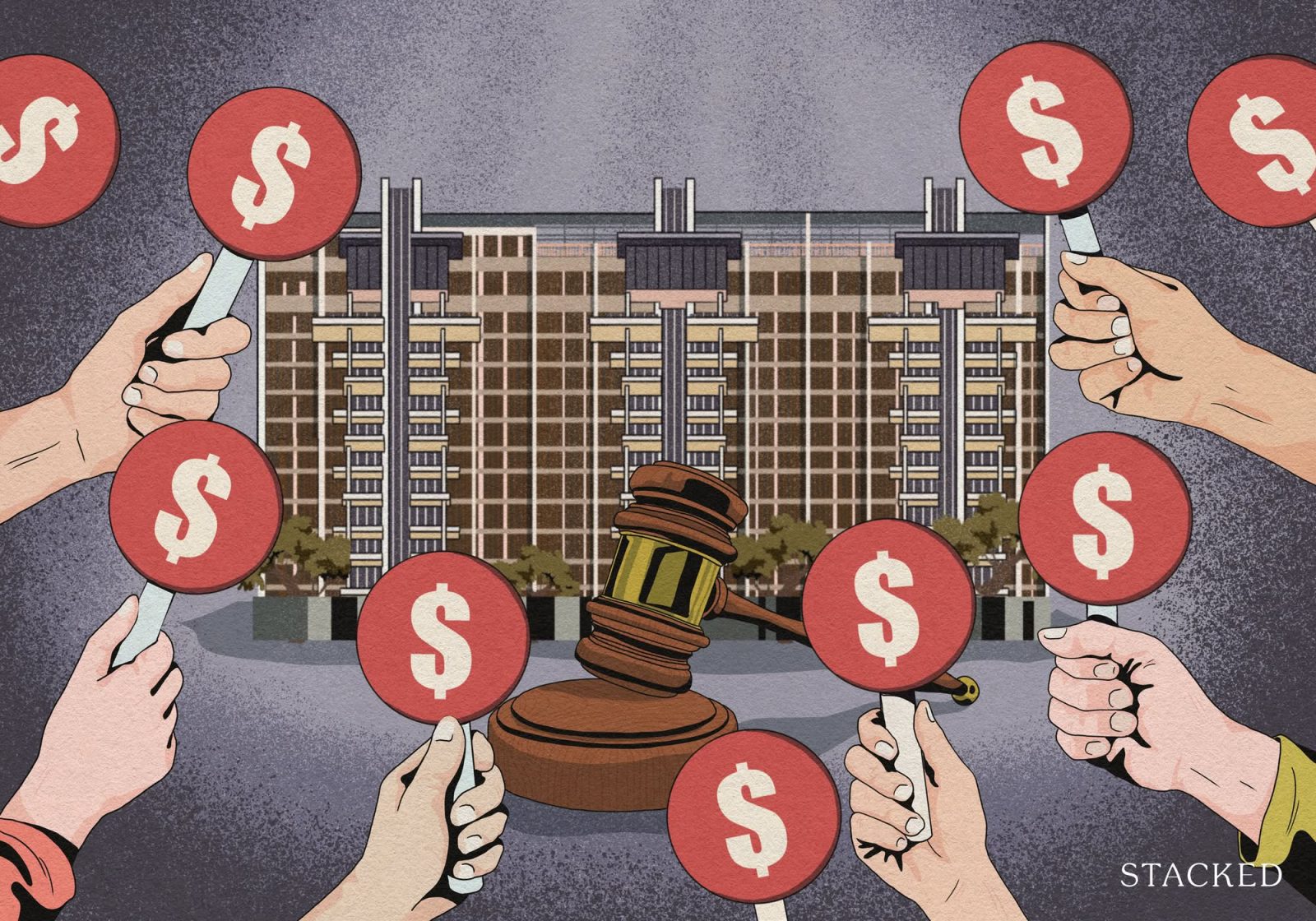
Mortgagee listings were up as of Q1 2025. Also referred to as distressed properties, these are homes that have been foreclosed on. The rise in mortgagee sales is a bit unsurprising, given the volatile economy and the higher interest rates in end-2024, but if you’re thinking this is a chance to snag some cheap properties, don’t get your hopes too high. Contrary to popular belief, mortgagee sales aren’t always a source of “cheap” houses:
The challenge for many buyers today isn't access to information.
It's interpreting that information in a way that makes sense for their finances, goals, and stage of life.
Over time, that's also why we decided to work with agents who shared the same data-driven and advisory-led approach behind our editorial, consultants who could help readers think through decisions more objectively, rather than simply push transactions.
Today, the team has worked with more than 2,000 clients across over $5B in property transactions.
Mortgagee listings are on the rise
Mortgagee sales in Singapore rose in Q1 2025. According to Knight Frank, there were 83 mortgagee sale listings in Q1 2025, a substantial rise from 67 listings in the previous quarter.
More than half of the 83 mortgagee sales were residential properties: they comprised 32 non-landed and five landed properties, while the others were commercial or industrial. The success of the auctions remained muted, with only seven properties actually being auctioned off.
That’s a success rate of just around five per cent, and it’s not uncommon, for reasons we’ll get into below.
The uptick in mortgagee sales has been attributed to the higher interest rate environment in 2023 and 2024. The situation is not as bad this year: the United States is expecting two rate cuts for 2025, which may help to slow the rising number of mortgagee sales.
In the overall market though, the number of mortgagee sales remains a slim fraction of total property transactions. Realtors said that measures such as the Total Debt Servicing Ratio (TDSR) prevent Singaporeans from being overleveraged; even in the case of distressed sellers, most are able to sell their property for a decent return before foreclosure happens.
Why are mortgagee auctions not a source of “cheap” properties?
The main reasons are:
- Mortgagee listings are on the rise
- Why are mortgagee auctions not a source of “cheap” properties?
- 1. Reserve prices are based on valuations, not fire sales
- 2. The reserve prices are seldom even met in an auction
- 3. Good units are usually “filtered out” before they even get to auctions
- So while there’s no harm in going to see the auction, don’t expect it to be a huge bargain
1. Reserve prices are based on valuations, not fire sales
Contrary to popular belief, banks don’t just slash the prices to offload the properties.
Banks are still obliged to recover as much of the outstanding loan as possible. Also, banks will use a valuation firm as they would for any other property, and set the reserve price based on market rates - they might take a lower valuation if the property hasn’t moved in some time, but you’re unlikely to see huge discounts from desperation.
If the property is sold due to issues like divorce or bankruptcy, the Court has its own system of accepting valuations. The valuation will, again, be from a certified property valuer. The Court will usually ensure no involved party is shortchanged, especially in divorces, where matrimonial assets are to be split. For these reasons, the property is rarely ever sold far below valuation.
One realtor also told us that, if the reserve price really is very low (i.e., even the property valuer agrees it’s not worth much), then it’s probably not the type of home the average buyer should consider. A typical example of such a property might be a landed home that’s badly deteriorated, and could require hundreds of thousands of dollars in restoration.
2. The reserve prices are seldom even met in an auction
As we mentioned above, the success rate at the auction is around five per cent. This isn’t inherently surprising: most auctions end without the reserve price being met. Later on, interested buyers tend to contact the selling party after the auction - and any transactions are made via private contracts.
So just because you hear or see bids that seem cheap, it doesn’t really mean anything - you can expect that most of them go nowhere. And if you do approach the sellers for a private sale, negotiations are not much different from buying any other property.
3. Good units are usually “filtered out” before they even get to auctions

Most realtors were unanimous in this: they all said that, if a property is excellent (good location, good views, decent price, etc.), it will almost never get to the mortgagee auction stage. Most of these better properties will be sold like any other property, via standard listings and marketing methods.
The properties that fail to move - such as remaining unsold even after a year of listing - tend to either be (1) extremely expensive, like a penthouse or bungalow unit that prices out the average buyer anyway, or (2) among the least desirable units, and hence unable to draw a buyer.
In the latter case, you might want to think twice before making your bid; and it doesn’t help that an auction setting gives you less time to think it over.
So while there’s no harm in going to see the auction, don’t expect it to be a huge bargain
You do need to register for an auction (big agencies like Knight Frank, JLL, and so forth will usually put these up on their website), but going is usually free. Do note that, in the event you do want to bid, you’re usually required to deposit a cheque on the day itself (often between five to 10 per cent of the purchase price). Contact the firm in charge of the auction for help and instructions specific to it.
At Stacked, we like to look beyond the headlines and surface-level numbers, and focus on how things play out in the real world.
If you'd like to discuss how this applies to your own circumstances, you can reach out for a one-to-one consultation here.
And if you simply have a question or want to share a thought, feel free to write to us at stories@stackedhomes.com. We read every message.




0 Comments