

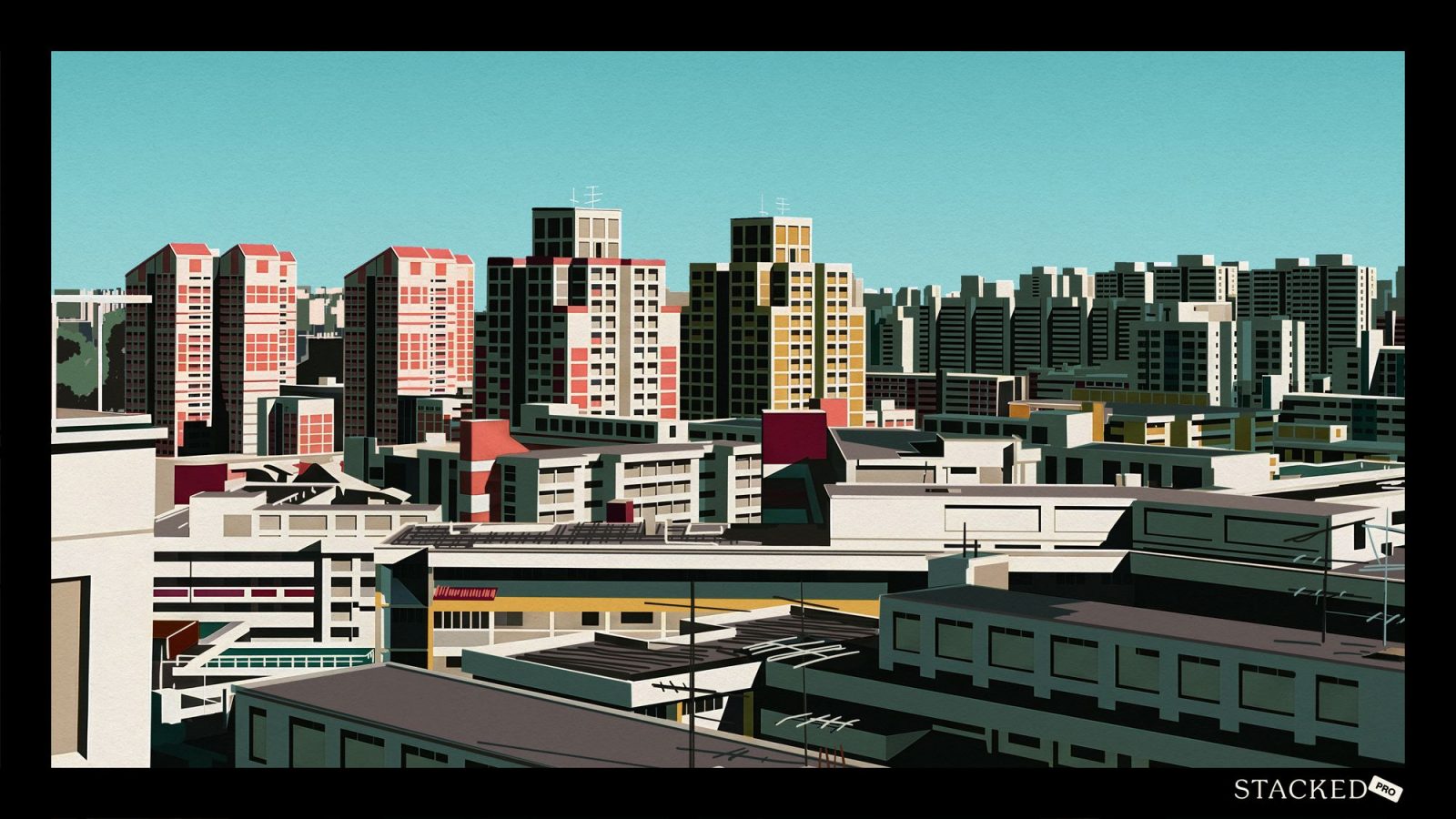
Bishan is one of Singapore’s most prominent towns and a unique residential neighbourhood. It isn’t a high-end central district like Orchard Road or Tanjong Pagar, but Bishan boasts the connectivity and amenities that rivals some of its prime residential counterparts.
Coupled with its neighbourly character - families grow up there, their children attend school in the area, and grandparents live nearby - Bishan commands an edge over some prime areas.
Bishan’s initial development into a residential town was also an improvement on previous HDB estates which had been built in Toa Payoh and Ang Mo Kio. Those towns were very successful in providing new homes quickly, but saw a high degree of standardisation in the form of long slab blocks, few variants in flat layouts, and an emphasis on practicality over neighbourhood identity.
Bishan was one of the first HDB estates where urban planners were tasked to experiment and explore ways which Singapore’s housing estates could look like. Thus, the urban design throughout most of Bishan reflects a sense of connectivity between homes, schools, transport facilities, and community amenities.
It was the first town where building heights were deliberately varied to create a more interesting skyline, and Bishan was once famous for having more open space than other townships. Some of these recognisable features include red-tiled pitched roofs, blocks that were spaced further apart, and broader pedestrian walkways.
As Bishan grew, the town was anchored by Bishan MRT Interchange on the North-South and Circle Lines (NSL, CCL). More schools also established themselves there, such as Raffles Institution, Raffles Girls' School, and Catholic High School, which further strengthened Bishan's appeal as a family-oriented estate.

0 Comments