

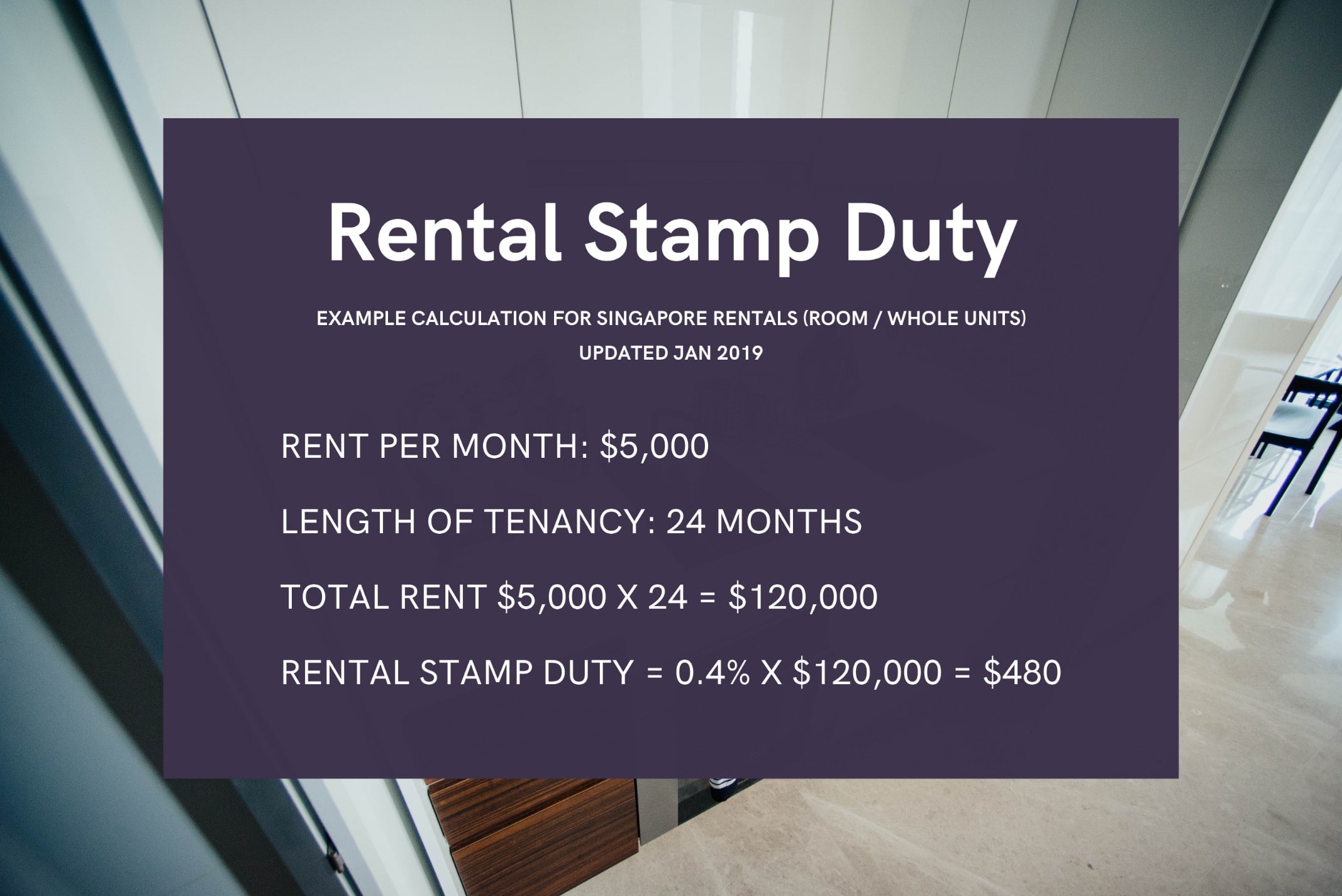
The amount that you will have to pay for rental stamp duty is dependant on the average annual rent (AAR). So on any lease period of 4 years or less, it is just 0.4% of total rent for the period of the lease. If it is a lease period of more than 4 years(which is very uncommon) it will be 0.4% of 4 times the AAR for the period of the lease.
If you are reading this right now, congrats! Finding a suitable home is probably the toughest process of the whole rental exercise, so everything else from then on will seem like a walk in the park. So now that you have signed your tenancy agreement you will have to pay the rental stamp duty on the TA to IRAS (Inland Revenue Authority of Singapore). The good news is that Singapore is mightily efficient and paying the rental stamp duty is an easy enough process.
Yield tables and rent charts are useful reference points, but the units that actually rent well and continue to attract tenants over time aren't always the ones at the top of a yield table.
The more important question is whether the investment still makes sense once you factor in holding costs, vacancy and your long-term plans. That's often where buyers find a second opinion most valuable.
Over time, that's also why we decided to work with agents who shared the same data-driven and advisory-led approach behind our editorial, consultants who could help readers think through decisions more objectively, rather than simply push transactions.
Today, the team has worked with more than 2,000 clients across over $5B in property transactions.
How to calculate rental stamp duty?
You will have to pay rental stamp duty on any AAR exceeding $1,000 (which is basically everyone). AAR includes consideration for other payments such as:
1. Advertising and promotion
2. Furniture and fittings
3. Maintenance
4. Service
5. Any other charges, excluding GST charges
So who pays for the stamp duty?
It is common practice in Singapore for the tenants to pay the rental stamp duty for tenancy agreements.
When should it be paid?
The rental stamp duty should be paid within 14 days if the tenancy agreement is signed in Singapore. If it is signed overseas, you will be given 30 days. Do not forget to pay as there are late payment penalties involved!
Is it compulsory to pay for the rental stamp duty?
In order for the agreement to be binding, the stamp duty has to be paid. If you are a landlord you can take action against tenants who fail to pay on time or decide that they would not pay for it after signing the tenancy agreement.
For late payments not exceeding 3 months, a penalty of $10 or an amount equal to the duty payable, whichever is greater, will be imposed.
For late payments exceeding 3 months, a penalty of $25 or 4 times of the duty payable, whichever is greater, will be imposed.

What if the rent is increased?
If in the situation that the rental amount is increased or tenancy lease is extended, stamp duty will be payable based on the increase in rental or the rental for the extended lease. The good news is that if there is a decrease in rental or the lease is shortened you do not have to do anything!
There are also other variations where the rental stamp duty will not have to be paid:
1. Changing the use of the property with no additional payment
2. Lifting the restrictions in the lease with no additional payment
3. Amending the terms of the lease that do not affect the rental and lease term such as addition of an option to renew
As always, feel free to leave a comment below or you can reach us at stories@stackedhomes.com!
Yield tables and rent charts are useful reference points, but the units that actually rent well through a cycle, after vacancy, holding costs, and your intended exit, aren't always the ones at the top of the list.
If you'd like to discuss how this applies to your own circumstances, you can reach out for a one-to-one consultation here.
And if you simply have a question or want to share a thought, feel free to write to us at stories@stackedhomes.com. We read every message.




0 Comments