

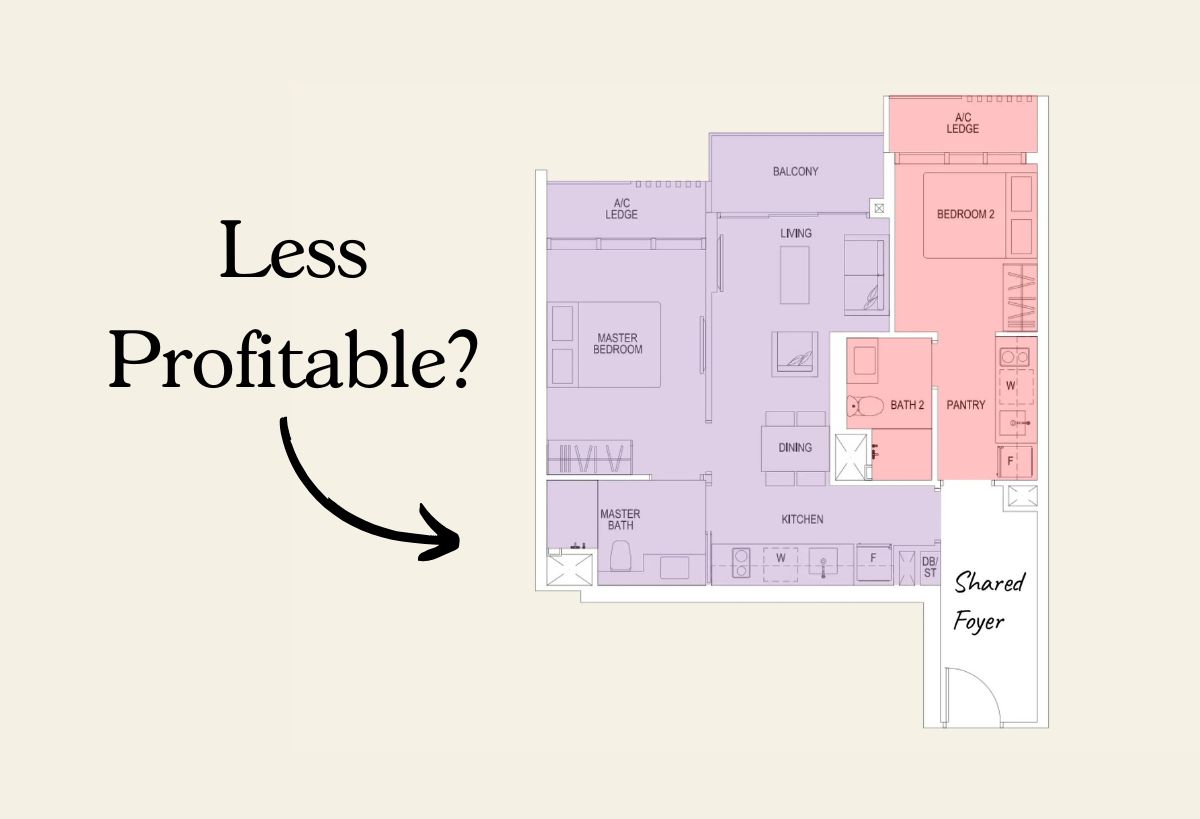
The industry-accepted belief is that dual-key units are niche layouts, intended for either rental benefits or extended family living; and they’re much less desirable for resale gain. But how true is this? We did a bit of digging to find out:
The challenge for many buyers today isn't access to information.
It's interpreting that information in a way that makes sense for their finances, goals, and stage of life.
Over time, that's also why we decided to work with agents who shared the same data-driven and advisory-led approach behind our editorial, consultants who could help readers think through decisions more objectively, rather than simply push transactions.
Today, the team has worked with more than 2,000 clients across over $5B in property transactions.
The theory on why dual-key units aren’t good for resale gains
Dual-key units are assumed to draw fewer buyers because the niche layout reduces living space, and not everyone would have a need for such a flexible layout. Besides the use of partitioning to create a sub-unit, a dual-key unit also has to include a pantry and an extra bathroom. Buyers who have no use for the sub-unit would probably prefer a bigger bedroom or living room, over such redundant utility rooms.
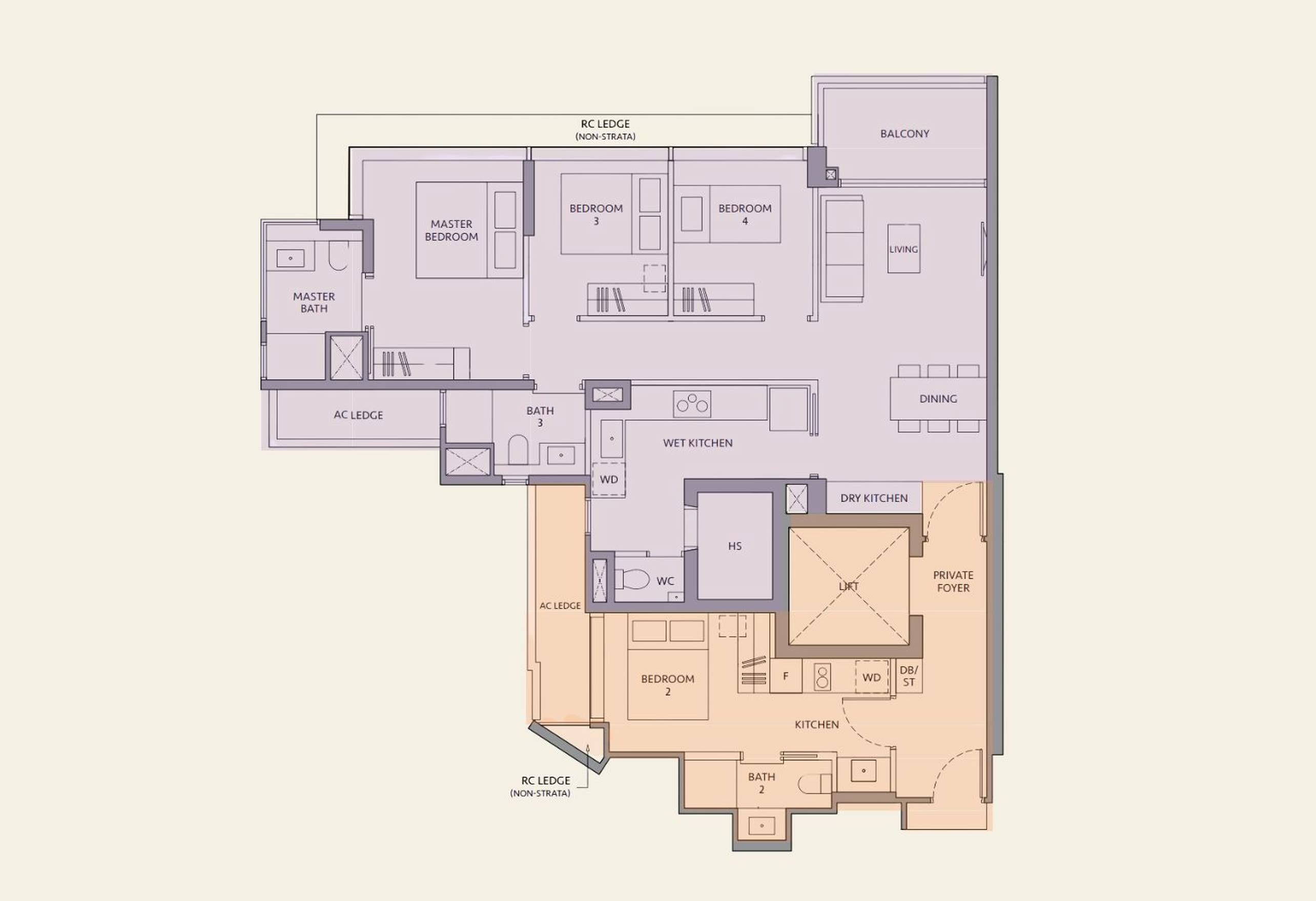
Dual-key units also tend to cost more on a per square foot basis, and not many buyers are happy to pay more when they have no need for a split unit.
As such, we took a look at some resale dual-key units in more recent launches, to see how their prices play out:
How well have dual-key units performed in recent new launches?
| Dual Key | Not Dual Key | ||||
| Projects | Avg % Returns | Vol | Avg % Returns | Vol | Difference |
| 120 GRANGE | 1.8% | 1 | -5.0% | 4 | 6.8% |
| ARENA RESIDENCES | 9.0% | 4 | 13.6% | 13 | -4.5% |
| BOTANIQUE AT BARTLEY | 21.7% | 4 | 26.3% | 293 | -4.6% |
| CITY GATE | 8.5% | 4 | 10.4% | 61 | -1.9% |
| COCO PALMS | 18.8% | 6 | 27.1% | 280 | -8.4% |
| GEM RESIDENCES | 27.4% | 1 | 20.2% | 156 | 7.2% |
| HIGH PARK RESIDENCES | 35.3% | 10 | 31.9% | 512 | 3.4% |
| HIGHLINE RESIDENCES | 21.6% | 1 | 18.4% | 84 | 3.2% |
| KALLANG RIVERSIDE | 7.6% | 3 | 11.9% | 19 | -4.3% |
| OLLOI | 17.5% | 1 | 24.0% | 1 | -6.5% |
| PARK COLONIAL | 8.9% | 2 | 20.1% | 139 | -11.2% |
| PARK PLACE RESIDENCES AT PLQ | 7.4% | 2 | 15.0% | 69 | -7.6% |
| PRINCIPAL GARDEN | 30.1% | 21 | 19.0% | 167 | 11.1% |
| RV ALTITUDE | 7.2% | 2 | 5.4% | 2 | 1.8% |
| SOPHIA HILLS | 2.4% | 14 | 4.6% | 63 | -2.2% |
| THE TAPESTRY | 34.4% | 6 | 16.6% | 162 | 17.7% |
| TRE RESIDENCES | 15.6% | 5 | 12.6% | 79 | 2.9% |
| TRILIVE | 7.2% | 38 | 5.5% | 8 | 1.7% |
| WHISTLER GRAND | 33.5% | 13 | 26.6% | 123 | 6.9% |
Some observations from the above
We can see it’s a bit hard to draw clear conclusions, due to the disparity in transaction volumes. Regular units outnumber dual-key units in most projects, and most resale transactions are for regular units.
Nonetheless, there is a case to be made that dual-key units fetching worse returns don’t always hold.
Consider The Tapestry and Principal Garden. The Tapestry’s dual-key units significantly outperformed regular units (34.4 per cent return, versus 16.6 per cent return for regular units). Principal Garden also saw its dual-key units beat its regular units, by a difference of 11.1 percentage points.
Gem Residences provides a less useful example, due to it having just one dual-key transaction; but this one transaction beat out regular units by a difference of 7.2 percentage points.
Conversely, Park Colonial, Coco Palms, and Park Place Residences all show significantly weaker returns for dual-key units.
Overall, it’s almost a 50-50 split, if you overlook the transaction volume issue. It may be that, although dual-key units appeal to a more niche group of buyers, there’s still sufficient buying power and interest among that niche group.
From the opinions of some realtors, the issue isn’t so much profitability, but saleability
When we asked some realtors about the above, they weren’t surprised that dual-keys beat regular units in some cases. However, they did point out that the downside was how long it could take to sell a dual-key unit or the number of offers a seller could expect.
Even if a dual-key unit does sell for a higher return, it may only be after a longer period than a regular counterpart; and this can still pose problems for sellers (i.e., by the time you find a profitable seller, your intended replacement home may be off the market).
One realtor did, however, point out a reason why dual-key units might be doing better of late: that’s the progressive increase in Additional Buyers Stamp Duty (ABSD):
The ABSD rate for Singapore citizens buying a second property is now at 20 per cent, and we’ve never seen ABSD rates go down in their entire history. By purchasing a dual-key unit, you indirectly avoid ABSD: you can rent one portion to a tenant, live with an in-law, etc. with full privacy, and without having to buy a second property.
This might incentivise some buyers to consider dual-key living, instead of actually buying two properties.
To conclude, dual-key units may take longer to sell, but it’s not a guarantee that they always do worse for resale gains
You would probably still prefer a regular condo unit if the goal is resale gains. But we’d be less quick to assume a dual-key unit is always going to do worse at resale: there’s clearly a market for them out there, and a willingness to pay for this less common layout.
At Stacked, we like to look beyond the headlines and surface-level numbers, and focus on how things play out in the real world.
If you'd like to discuss how this applies to your own circumstances, you can reach out for a one-to-one consultation here.
And if you simply have a question or want to share a thought, feel free to write to us at stories@stackedhomes.com. We read every message.



0 Comments