














































A Fight Over The Sale Of An HDB Flat: 3 Interesting Takeaways From A Co-ownership Tussle



In recent news, we’ve heard of the struggle between a widow and her brother-in-law, over an HDB flat. Her husband had left his portion of the flat to her (30 per cent) after passing on. Her brother-in-law (who owned the remaining 70 per cent), however, argued that she shouldn’t have sole control over the sale, given her minority share. This led to a ruling that the brother-in-law would have first right of refusal. Here’s a look at what happened, and how it may matter to you:
Market commentary like this is only useful if you can translate it into what it means for your own purchase: your entry price, holding period and exit options.
That’s where many buyers get stuck. General market insights rarely tell you whether a specific unit, at a specific price, is the right decision for your circumstances.
Over time, that’s also why we decided to work with agents who shared the same data-driven and advisory-led approach behind our editorial, consultants who could help readers think through decisions more objectively, rather than simply push transactions.
Today, the team has worked with more than 2,000 clients across over $5B in property transactions.
Ending up a co-owner with someone besides your spouse
In the recent case, the widow’s late husband had willed his 30 per cent share in the HDB flat to his wife, thus making his spouse and brother co-owners. The widow wanted the flat to be sold, but wasn’t on good terms with her brother-in-law. There was a history of family violence against her, and she initially sought a personal protection order against him (which was discontinued after mediation) and she was also locked out of the flat at one point.
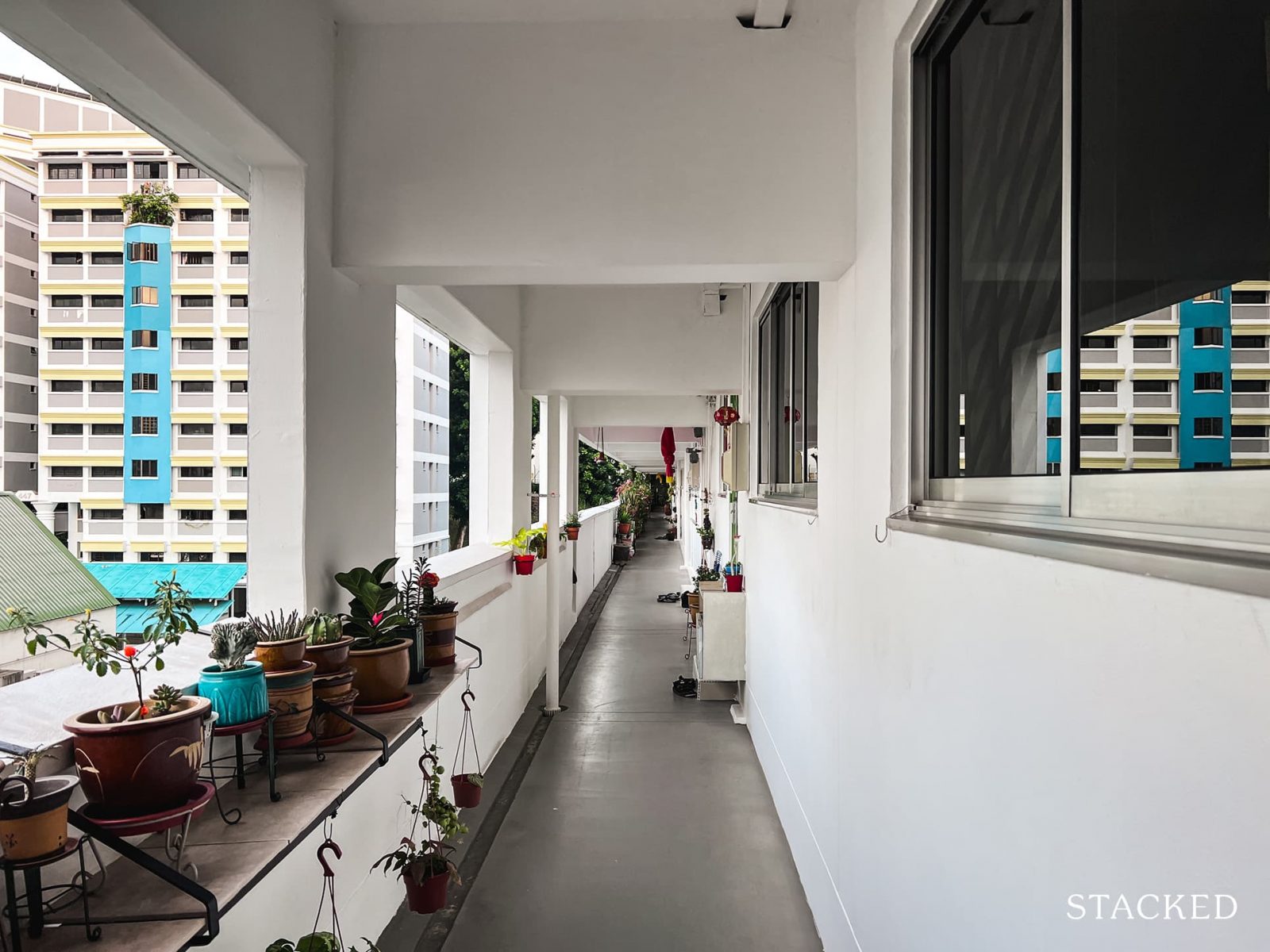
In the resulting legal case, the brother was granted first right of first refusal – he would have the opportunity to buy over her share of the flat, before it was sold to anyone else. In addition, the judge had the sale conducted by both parties instead of just one.
Here’s how it worked:
- There would be a moratorium period of six months, during which the brother-in-law could buy over the widow’s share of the flat at 30 per cent of the HDB valuation
- After six months, the flat can be sold on the open market, and the sale will be jointly conducted. Once either party receives an offer at market valuation or higher, they must sell the flat (with a 70/30 split of the proceeds)
- When the widow receives a valid offer, she must inform the brother-in-law within 48 hours. He then has first right of refusal to buy over her share of the flat, at 30 per cent of valuation or the third-party’s offer price, whichever is higher.
As such, the takeaway here is that the Court can compel the sale of the property in these instances; even if one party refuses to sell.
What about partitioning the property, or tenancy-in-common?
If you have tenancy-in-common as your manner of holding, an alternative is to ask for the property to be partitioned. If the co-owner(s) agree, you can divide up the house in a way that allows you to sell only your portion of the property. The other co-owner(s) continue to retain their share after you sell.
The problem is there’s no guarantee that this is practical, or that the co-owner(s) will agree. In the above case, for instance, it wouldn’t be feasible to partition an HDB flat to sell it. Almost no one will want to buy part of an HDB flat and co-own it with a stranger. A whole condo block or a large bungalow, possibly, but definitely not a flat.
It’s also impossible because there are land plot requirements – the land plot of the partitioned-off area would need to meet URA’s minimum sizes.
As such, most such disputes end up with a co-owner seeking a court order to compel the sale.
These situations can be uncomfortable for realtors
Hopefully, both sides are now amicable to the resolution. One concern over these types of sales is that the process can be tense – if both sides don’t get along this can also become a headache for the property agent (which is why cases such as this might find it hard to get an agent to want to take on).
There may be further disputes to smooth over, such as if one party prefers another realtor, or doesn’t agree with the realtor’s advice. As both co-owners are jointly conducting the sale, they have equal input on the eventual decision.
Added note: en-bloc sales and co-owners
A tangential question to all this is what happens, if an en-bloc sale happens and co-owners can’t agree. The answer is that both parties have to agree to en-bloc; otherwise, they count as voting against it.
This is important to bear in mind when co-investing in older properties. You and your co-owners should agree, well beforehand, on what your course of action will be if an en-bloc sale comes along.
Editor’s Note: The above was removed as it only applies to private residential properties, not HDB.
Takeaways from this case
The first is to consider whether divvying up your property, such as through a tenancy-in-common, is truly practical. As we’ve stated above, even being able to partition the property isn’t as great an option as it sounds – and you need to consider if your spouse or surviving co-owner will be comfortable holding the property with a third party.
The second is to consider if willing percentages of your home to various family members is ideal. If no one is in dire need of a place to stay (e.g., your spouse will be provided for, and all your children have homes of their own), it may be better to just will the property be sold and the proceeds divided up. This could prevent some potential disputes from surfacing.
Also keep in mind that some family members – such as those who are below 35 – may not qualify to own your flat or any portion of it, if you pass on sooner than expected.
The third takeaway is for those who already know a percentage of the property will go to someone else.
The case above is not atypical – it’s common for the Court to grant the right of first refusal to a co-owner, thus giving you the opportunity to buy before others. But note that a time limit is involved (in this case, six months).
So if you’re dead set on keeping the property, you may want to start saving and ensure you can buy over the remaining shares. Keep in mind that banks may be reluctant to grant loans under such circumstances.
For more news and happenings in the Singapore property market, follow us on Stacked. We’ll also provide you with in-depth reviews of new and resale projects alike.
Commentary like this is useful for understanding the broader market. The harder part is applying those ideas to a specific property, budget or decision you’re actually considering.
That’s often where a second opinion becomes valuable.
If you’d like to discuss how this applies to your own circumstances, you can reach out for a one-to-one consultation here.
And if you simply have a question or want to share a thought, feel free to write to us at stories@stackedhomes.com. We read every message.
Frequently asked questions
What happens if co-owners of an HDB flat can't agree on selling it?
Can I buy out a co-owner’s share of an HDB flat before it’s sold to others?
Is partitioning a flat a practical way to resolve co-ownership disputes?
What should I consider if I want to leave my property to family members in my will?
What is the significance of the six-month moratorium period in co-ownership disputes?





0 Comments